
Hiring Managers Are Mirroring AI Bias in Recruitment: Research
Advertisement

As the Class of 2026 enters a fiercely competitive labor market where entry-level job applications have surged to three times 2022 levels, automated recruitment systems have taken center stage.
Advertisement
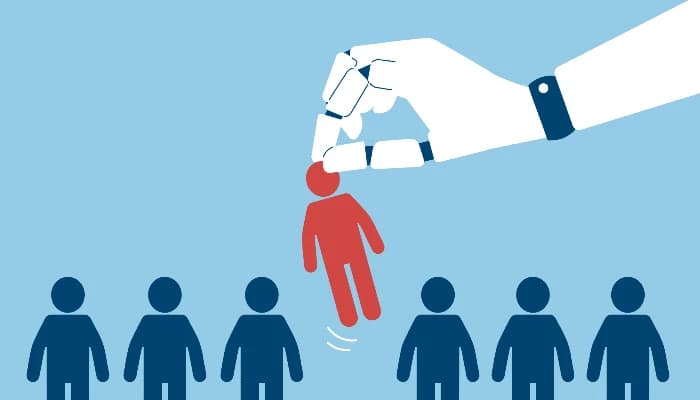
However, a groundbreaking Stanford University study has unmasked a dark reality behind the convenience: AI hiring algorithms are driving “systemic rejection,” disproportionately screening out Black and Asian job applicants.
The “Black Box” of Algorithmic Monocultures
The study, titled Algorithmic Monocultures in Hiring, tracked 4 million applications across 156 major employers utilizing a single third-party vendor’s assessment platform.
The findings were staggering. Applying the U.S. Equal Employment Opportunity Commission’s (EEOC) “four-fifths rule” for legal adverse impact, researchers discovered that 26% of Black applicants and 15% of Asian applicants were subjected to automated racial discrimination.
Advertisement
If the AI had evaluated these applicants at the same rate as the most-favored group (typically white candidates), an additional 40,000 diverse applications would have advanced to the next round.
A major hazard identified is market concentration.
Because a massive share of the corporate landscape relies on identical algorithmic models, an applicant rejected by one employer automatically fails at others using the same software.
In fact, the system completely shut out 10% of candidates applying to four different roles under the same vendor.
Advertisement
How Inherent Bias and Human Review Failures Coexist in Recruitment
Systems typically create automated bias when training on historical hiring patterns, inadvertently replicating institutional inequities.
Even when explicit demographic data is removed, sophisticated algorithms latch onto “proxy variables”—such as specific ZIP codes, graduation years, or culturally aligned student associations—to filter out applicants.
Furthermore, a late-2025 University of Washington study revealed a dangerous human element: hiring managers seamlessly absorb and mirror AI bias.
When presented with moderately biased AI recommendations, human reviewers accepted and perpetuated those exact discriminatory choices 90% of the time, debunking the myth that human oversight naturally corrects automated flaws.
With major legal precedents like Mobley v. Workday working their way through courts, and new frameworks like the Colorado AI Act taking effect, legal experts warn that employers can no longer deflect liability to tech vendors.Automated efficiency with unlawful bias remains illegal discrimination.
Note: We are also on WhatsApp, LinkedIn, and YouTube to get the latest news updates. Subscribe to our Channels. WhatsApp– Click Here, YouTube – Click Here, and LinkedIn– Click Here.
About the Author
Sahiba Sharma
Sahiba Sharma, Senior Editor - Content at SightsIn Plus
View all articles by Sahiba Sharma →