


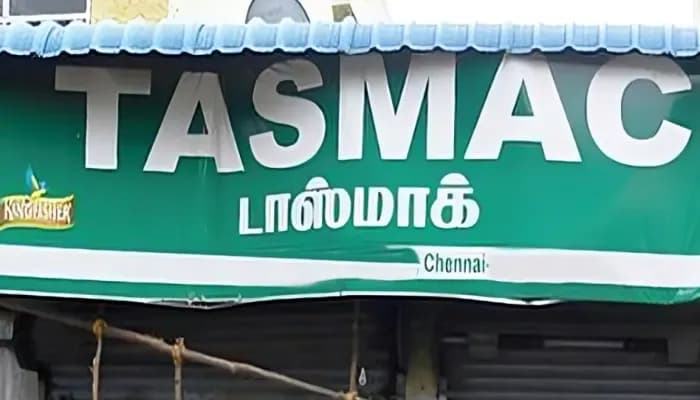

A coordinated one-day strike organized by employees of the Tamil Nadu State Marketing Corporation (TASMAC) led to a massive shutdown of 213 liquor retail outlets across Coimbatore district.
Advertisement
The flash shutdown significantly disrupted the region’s beverage industry, resulting in an estimated sales loss of Rs 8.5 crore in a single day.
The demonstration was spearheaded by the Coimbatore Zone TASMAC Joint Action Committee.
The trade union body announced that the shutdown was an escalation aimed at drawing state attention toward poor working environments, severe staffing imbalances, and new operational bottlenecks.
The Breaking Point: Opposition to Bottle Buyback Scheme
Advertisement
A primary catalyst for the widespread agitation is the workers’ fierce opposition to the government’s newly introduced empty bottle buyback scheme.
Under this system, customers return empty liquor bottles to retail outlets to receive a refund of ₹10 per bottle.
Union leaders contend that handling the return, sorting, and storage of millions of empty glass bottles drastically expands their daily workload without any matching increase in manpower.
Laborers emphasized that they lack the physical infrastructure or extra space to safely store bulk empty bottles.
This limitation creates severe space constraints inside already cramped outlets and raises major on-site safety concerns.
Advertisement
TASMAC Staff Demands for Structural Reform and Fair Wages
Beyond the bottle buyback program, the strike highlighted deeply rooted labor grievances.
Convenor A. John revealed that many retail workers have logged 23 years of service without receiving permanent employment status or statutory social security benefits.
He noted that their average monthly wages remain stagnant around ₹15,000.
The union presented a comprehensive list of demands to state managers, including:
- Operational Expense Reductions: Shifting the financial burden of shop rent, electricity bills, and bottle-unloading wages away from employees’ personal pockets.
- Redeployment Strategy: Moving surplus staff from recently shuttered outlets into other government departments based on educational qualifications.
- Outsourcing and Welfare: Handing the bottle buyback scheme over to independent private agencies while legally establishing an eight-hour workday and Employee’s State Insurance (ESI) benefits.
Unions across multiple districts have warned that their deep-seated grievances remain unaddressed by senior administration officials.
Consequently, they will initiate an indefinite, state-wide shop closure starting June 1, 2026.
Note: We are also on WhatsApp, LinkedIn, and YouTube to get the latest news updates. Subscribe to our Channels. WhatsApp– Click Here, YouTube – Click Here, and LinkedIn– Click Here.
About the Author
Sahiba Sharma
Sahiba Sharma, Senior Editor - Content at SightsIn Plus
View all articles by Sahiba Sharma →