
Allahabad HC Halts Criminal Case Against Wipro Founder
Advertisement


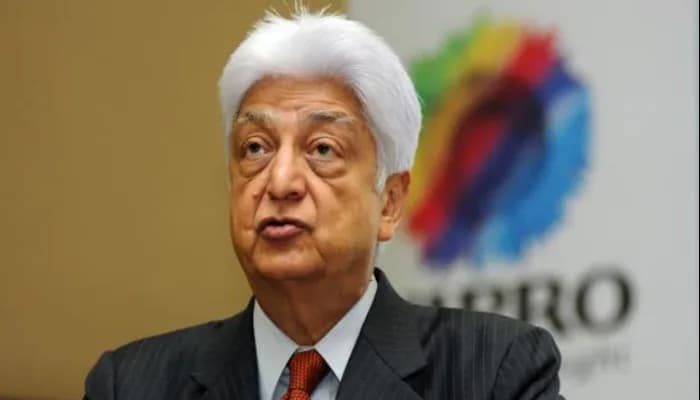

The Lucknow Bench of the Allahabad High Court has provided major legal relief to Wipro Limited founder and chairperson Azim Premji.
Advertisement
The court quashed a decade-old criminal case and set aside a local magistrate’s summoning order issued against him and other senior company officials regarding alleged labour law violations.
Presiding over the case, Justice Zafeer Ahmad ruled on an application filed under Section 482 of the Code of Criminal Procedure (CrPC).
The court declared that top corporate executives cannot be held vicariously or criminally liable for technical, operational infractions unless a complaint explicitly establishes their active, direct involvement.
The Wipro Case Origins and Lack of Direct Involvement
Advertisement
The legal battle stemmed from a complaint filed by the Uttar Pradesh Labour Department, which alleged non-compliance with labour regulations at Wipro’s regional establishment.
Acting on this complaint, the Chief Judicial Magistrate (CJM) in Lucknow had issued a summoning order on February 8, 2017.
Representing Premji, advocates Karunanidhi Yadav and Prateek Pal Singh argued that the billionaire industrialist was based in Bengaluru and had absolutely no role in the day-to-day operations of the local office.
Furthermore, the defense demonstrated that Wipro had outsourced its on-site security operations to an independent contractor, G4S Secure Solutions India Private Limited, under a March 2015 agreement.
Under this contract, G4S held exclusive responsibility for payroll, statutory dues, provident funds, and independent labour compliance.
Advertisement
A Critique of “Mechanical” Corporate Prosecutions
The High Court agreed with the defense, criticizing the practice of targeting high-level corporate personnel based purely on executive designation.
Justice Ahmad emphasized that criminal liability cannot be fastened in a mechanical manner unless a statute specifically defines vicarious liability for that role.
The court also pulled up the magistrate’s initial 2017 summoning order, labeling it “wholly cryptic, non-speaking,” and issued in a proforma routine.
The judgment reiterated that summoning an individual in a criminal case remains a grave legal matter requiring strict judicial scrutiny.
Because continuing the case would amount to an abuse of the judicial process, the High Court allowed Premji’s plea and terminated all consequential proceedings.
Note: We are also on WhatsApp, LinkedIn, and YouTube to get the latest news updates. Subscribe to our Channels. WhatsApp– Click Here, YouTube – Click Here, and LinkedIn– Click Here.
About the Author
Sahiba Sharma
Sahiba Sharma, Senior Editor - Content at SightsIn Plus
View all articles by Sahiba Sharma →