


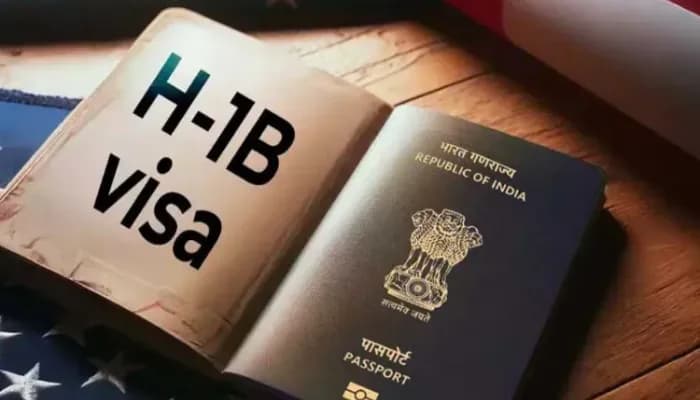

For thousands of Indian H-1B tech professionals in the United States, the American dream is currently tethered to a ticking clock.
Advertisement
As industry giants like Meta, Amazon, and Oracle execute fresh waves of layoffs in 2026, a growing number of H-1B visa holders have been plunged into a “60-day crisis”—the maximum grace period allowed by U.S. Citizenship and Immigration Services (USCIS) to secure a new sponsor or face deportation.
The Race Against the 60-Day Clock for Indian H-1B Workers
Under current federal regulations, an H-1B worker who loses their job has exactly 60 days (or until their current visa expires, whichever is shorter) to find a new employer willing to file a transfer petition.
The tech sector has shed over 110,000 jobs across 144 companies in the first half of 2026 alone.
Advertisement
Consequently, the competition for remaining visa-sponsoring roles has reached a fever pitch.
For many, this isn’t just about a paycheck; it is a battle to keep homes, children’s schooling, and a decade’s worth of roots in the U.S.
Vanishing Safety Nets: The B-2 Visa Hurdle
In previous years, laid-off workers often bought time by switching to B-2 (visitor) visas, which allow for a six-month stay.
Advertisement
However, immigration attorneys report a recent surge in Requests for Evidence (RFEs) and “Notices of Intent to Deny” for such applications.
Federal authorities are increasingly scrutinizing whether these switches are being used purely for job hunting.
This intensified oversight has made the temporary “safety net” far more difficult to secure.
A Structural Vulnerability
The crisis is particularly acute for Indians. They accounted for over 283,000 of the roughly 406,000 approved H-1B petitions in the last fiscal year.
Many are stuck in decades-long green card backlogs, meaning they cannot easily transition to permanent residency. Consequently, a single layoff email can instantly undo years of professional contribution.
As the industry shifts toward “AI-first” structures, many H-1B workers are looking toward Canada or Europe as more stable alternatives.
They fear that the U.S. tech visa system no longer offers the security it once did.
Note: We are also on WhatsApp, LinkedIn, and YouTube to get the latest news updates. Subscribe to our Channels. WhatsApp– Click Here, YouTube – Click Here, and LinkedIn– Click Here.
About the Author
Sahiba Sharma
Sahiba Sharma, Senior Editor - Content at SightsIn Plus
View all articles by Sahiba Sharma →