
TCS Chairman’s Bold Vision for a New Operating Model in IT Services
Advertisement
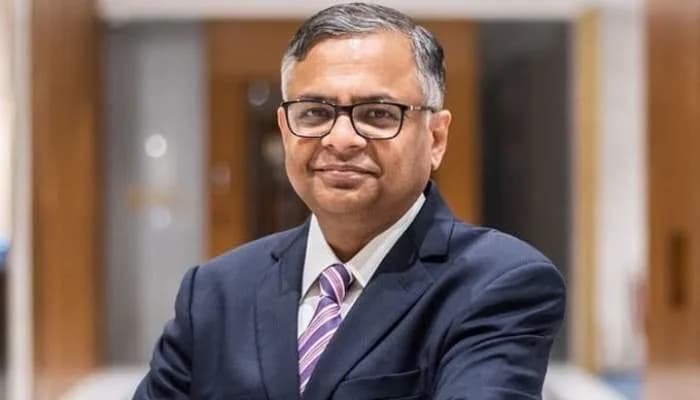

Chairman N. Chandrasekaran Says AI Will Transform the IT Services Model Over the Next Three Years
Advertisement
India’s largest IT services company, Tata Consultancy Services (TCS), is preparing for a future where artificial intelligence becomes as integral to its workforce as its employees.
Speaking at the company’s Annual General Meeting (AGM), TCS Chairman N. Chandrasekaran said that within the next three years, the company could have as many AI agents as human employees, signaling a major shift in how technology services will be delivered.
TCS, which employs more than 5.8 lakh people globally, expects AI agents to work alongside employees, automating routine tasks, accelerating software development, enhancing customer support, and improving overall productivity.
Advertisement
According to Chandrasekaran, AI is no longer an experimental technology but a foundational capability that will redefine business operations. Rather than replacing humans entirely, AI agents are expected to complement the workforce, enabling employees to focus on higher-value and more strategic responsibilities.
A New Operating Model for IT Services
The chairman’s remarks provide a glimpse into the future operating model of the IT services industry. Traditionally, growth in the sector has been closely linked to employee headcount.
However, AI-driven automation is gradually changing this equation. Companies are increasingly looking to scale services through a combination of human expertise and intelligent digital agents.
TCS has been investing heavily in AI capabilities, platforms, and talent development. The company reported significant growth in AI-led business engagements over the past year, with enterprises across industries seeking assistance in deploying AI solutions at scale.
Advertisement
As organizations accelerate their digital transformation journeys, demand for AI-enabled services continues to rise.
Implications for Hiring and Skills
While the emergence of AI agents may raise concerns about job displacement, Chandrasekaran emphasized that TCS does not foresee widespread layoffs as a result of AI adoption.
Instead, the company expects a gradual transformation of roles and skill requirements.
Industry experts believe that the rise of AI agents will increase demand for professionals skilled in AI governance, data engineering, cybersecurity, prompt engineering, and human-AI collaboration.
Employees will need to continuously upskill to remain relevant in an increasingly AI-powered workplace.
The Road Ahead
TCS’s vision indicates a broader trend reshaping the global technology sector. As AI becomes deeply embedded in business processes, organizations are moving toward hybrid workforces where humans and digital agents collaborate seamlessly.
If Chandrasekaran’s prediction materializes, the next three years could mark one of the most significant workforce transformations in the history of the IT industry.
For TCS and its peers, success will depend not only on deploying AI at scale but also on ensuring that employees are equipped to thrive alongside intelligent machines in the future of work.
Note: We are also on WhatsApp, LinkedIn, and YouTube to get the latest news updates. Subscribe to our Channels. WhatsApp– Click Here, YouTube – Click Here, and LinkedIn– Click Here.
About the Author
SightsIn Plus
SightsIn Plus is an India’s leading high-quality people-focused monthly HR Magazine and provides up-to-date HR News, Leadership Announcements, Best HR Practices and Insights by Global CHROs, CEOs, HR Advisors, Business Managers and HR Heads on topics of interest to HR professionals. To subscribe SightsIn Plus, HR Magazine please visit- https://sightsinplus.com/subscribe/
View all articles by SightsIn Plus →