
Why 85% of Workers Use AI but Few Feel Prepared
Advertisement
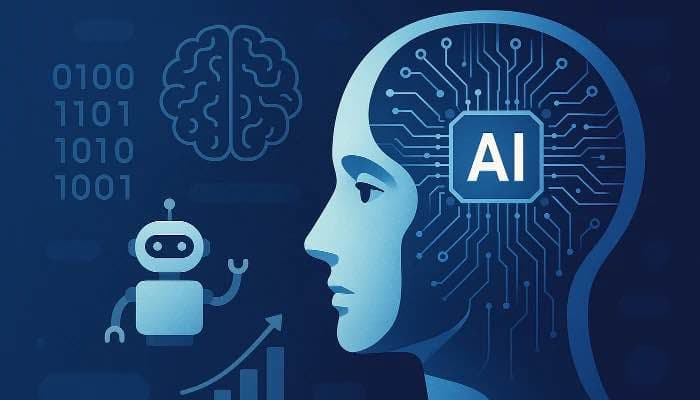

A startling “readiness paradox” has emerged in the global workforce as AI becomes a standard office tool.
Advertisement
According to the 2026 Professional Sentiment Survey by Simplilearn, while a staggering 85% of professionals now report regular AI usage at work, a mere 26% feel well-prepared to leverage these tools for long-term career growth.
The Corporate Disconnect With AI
The survey highlights a significant rift between individual initiative and organizational support.
Although 69% of respondents state that AI is now partially or extensively embedded in their daily workflows, 71% believe their employers are failing to provide adequate training or preparation for this transition.
Advertisement
This lack of institutional guidance is forcing workers to take matters into their own hands.
Approximately 76% of professionals plan to personally invest in professional certifications or specialized AI training throughout 2026 to bridge the gap.
Experts warn that without verified skills intelligence, this “skills shortage” could cost the global economy up to $5.5 trillion by 2026 due to product delays and missed revenue opportunities.
A New “Agency Equation”
Advertisement
Despite the anxiety, leadership trends suggest a shift from simple automation to “human-machine synergy”.
The 2026 Work Trend Index describes a new “agency equation,” where AI agents handle routine execution, theoretically allowing humans more “agency” to direct work and own outcomes.
However, the transition is proving difficult.
While 85% of CEOs now expect all functional leaders to become technology experts in their domains, only 10% of organizations report that AI is currently driving significant growth.
For many, the technology remains in a “pilot and experiment” phase, with 53% of companies still struggling to move beyond initial testing.
The Path Forward
To close the readiness gap, talent teams are being urged to move away from generic training and toward applied, role-specific curricula.
The focus is shifting toward “agentic AI”—autonomous systems that handle complex tasks like pricing updates or inventory allocation, which already account for 25% of operational decisions in leading firms.
Note: We are also on WhatsApp, LinkedIn, and YouTube to get the latest news updates. Subscribe to our Channels. WhatsApp– Click Here, YouTube – Click Here, and LinkedIn– Click Here.
About the Author
Sahiba Sharma
Sahiba Sharma, Senior Editor - Content at SightsIn Plus
View all articles by Sahiba Sharma →