
Can Predictive Analytics Actually Build a More Human Workforce?
Advertisement



“The most important thing in communication is hearing what isn’t said.” — Peter Drucker
Advertisement
Every organization has a Ravi; the dependable engineer who quietly holds a production line together, the sales manager who delivers quarter after quarter without making a fuss, the HR business partner who somehow knows how to calm difficult situations before they become difficult.
In another company, Ravi might be Priya, Aisha, David or Meera. The names change. The story rarely does.
I have often wondered why organizations celebrate visibility while being built by people who are, for the most part, invisible. Annual awards recognize a handful of stars. Leadership reviews discuss high-potential talent. Succession meetings revolve around the next generation of leaders.
Yet the real strength of an enterprise usually lies somewhere in the middle: the people who show up every day, solve problems, coach new colleagues, reassure anxious customers and quietly keep the machine running. We don’t ignore them. In fact, we value them enormously. We simply assume they will always be there.
Advertisement
That’s where Ravi’s story begins.
He joined as a graduate trainee. Bright, curious, and eager to learn, he absorbed new skills faster than most of his peers. Within two years, he had become the person everyone depended on when a customer issue became complicated or a project started slipping. His manager appreciated him. His colleagues trusted him. HR knew he was performing well. Every review described him in almost identical language: “Consistent.” “Reliable.” “Strong performer.”
Three years later, Ravi was still doing well. Five years later, he was still doing well.
Looking back, that phrase – doing well – can sometimes be dangerously misleading. It often becomes a polite way of saying that nobody has paused long enough to ask whether the person has outgrown the role, lost interest in the work, or quietly developed capabilities that the organization hasn’t yet recognized.
The truth is that careers rarely change because of one dramatic event. They are shaped by small moments that seem ordinary while they’re happening. A manager who notices someone is ready for greater responsibility. A mentor who spots confidence hidden beneath quietness. A conversation that happens just before frustration turns into disengagement. A learning opportunity offered before skills begin to stagnate.
Advertisement
None of these moments make headlines inside an organization. Yet they determine whether people merely stay or genuinely grow. That, to me, has always been the real work of leadership.
For years, I believed leadership was largely about making the right decisions. Experience has nudged me towards a different conclusion. Leadership is just as much about noticing the right moments.
The difficulty, of course, is that attention doesn’t scale.
A leader responsible for twenty people can observe subtle changes. They know who has become quieter than usual, who seems unusually energised after a new assignment or who has stopped asking the thoughtful questions they once asked regularly. But what happens when that responsibility extends to two thousand people spread across locations, functions and time zones? The willingness to care doesn’t disappear. The ability to notice inevitably does.
Every business function has solved this problem in its own way. Finance forecasts cash flow before liquidity becomes a concern. Supply chains anticipate disruptions before factories run out of material. Sales teams constantly refine demand forecasts because waiting until the quarter ends is simply too late.
Curiously, the one function responsible for people has spent decades becoming exceptionally good at explaining yesterday.
We conduct exit interviews after someone has left. We analyse engagement surveys after enthusiasm has faded. We identify capability gaps after a project has struggled. Reflection has immense value, but reflection has one obvious limitation; it arrives after the moment when intervention could have changed the story.
This is why I think the conversation around predictive analytics deserves a reset.
We spend far too much time talking about algorithms, dashboards and AI models. Useful topics, certainly, but they miss the larger point. The real promise of predictive analytics is not that it predicts people and their behaviour. Human beings have a wonderful habit of proving predictions wrong. We change our minds. We discover new ambitions. We surprise ourselves. No algorithm will ever fully understand the richness of a human life.
What predictive analytics can do is something both simpler and, in my view, more valuable. It can help leaders notice moments that deserve attention.
Imagine Ravi once again. His performance remains consistently high, but over the past few months his learning activity has slowed. He no longer volunteers for cross-functional initiatives. His internal network has become smaller. None of these observations means Ravi is disengaged. None of them suggests he is about to resign. They simply indicate that something has changed. Perhaps nothing is wrong. Perhaps everything is. Either way, it may be time for a conversation.
Notice how different that is from saying, “Ravi is a flight risk.” One statement attempts to predict an outcome. The other invites leadership.
I’ve come to believe that the future of HR will not be defined by how accurately it predicts events. It will be defined by how consistently it helps leaders arrive earlier.
Timing, strangely enough, is one of the least discussed qualities of leadership. Yet when we look back at our own careers, timing is often what we remember most.
Employees, like Ravi, don’t want algorithms making decisions about their careers. Nor should they. Data can reveal patterns; it cannot understand context. It can identify possibilities; it cannot appreciate personal circumstances. It can recommend a conversation, but only a leader can bring curiosity, empathy and judgment to that conversation. Technology should expand humanity, not replace it.
For decades, HR has worked hard to become more scientific, and rightly so. Data has earned the function credibility, influence and a stronger voice in business decisions. But perhaps the next chapter is not about becoming even more scientific. Perhaps it’s about becoming more attentive.
If predictive analytics can help us recognise those moments while they are still unfolding, not to replace judgment, but to inspire it, then its greatest contribution will have very little to do with technology.
It will remind us that behind every dashboard is a Ravi, behind every pattern is a story, and behind every meaningful career is usually one leader who noticed something before everyone else did.
And that may be the most human use of artificial intelligence we will ever discover.
Note: We are also on WhatsApp, LinkedIn, and YouTube to get the latest news updates. Subscribe to our Channels. WhatsApp– Click Here, YouTube – Click Here, and LinkedIn– Click Here.
About the Author
Balamalai Ranganathan
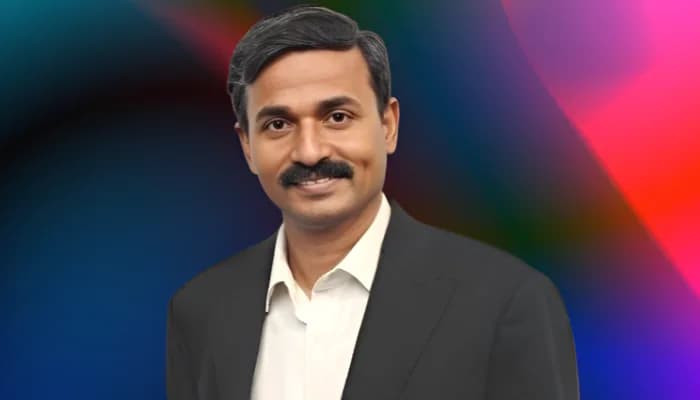
Balamalai Ranganathan, Senior Vice President of Strategic Product Management at Adrenalin, brings over 26 years of expertise in HR payroll lifecycles and managed services transformations. A visionary leader with 250+ global implementations, he has pioneered innovations in AI, blockchain, and financial wellness. Bala’s career, including leadership roles at Ramco Systems, is marked by international success and achieving 100% revenue growth. He holds a distinction in Electronics Engineering from MIT Chennai and a Master’s degree in Yoga.
View all articles by Balamalai Ranganathan →