
Building a Performance-Driven Culture Through Transformation and Scale-Up
Advertisement

Every organization today is talking about AI, future skills and workforce transformation. These are important conversations. However, many organizations are attempting to become future-ready without first becoming present-ready. That is a mistake.
Advertisement
An organization cannot build a sustainable future on weak foundations. Before focusing on future skills, it must understand its current capability gaps. Before deploying AI at scale, it must have reliable data, effective processes and fit-for-purpose systems. Before talking about a high-performance culture, it must ensure clarity of goals, consistency of decisions and accountability across levels.
The same principle applies to workforce capability. Reskilling is often positioned as a future-focused agenda, but in reality it starts with understanding whether the workforce has the skills required for today’s business challenges.
Continuous learning creates impact only when it solves current capability gaps while preparing people for emerging needs. Organizations that scale successfully do not separate present performance from future capability; they strengthen both together.
Future readiness is important. Present readiness is non-negotiable.
Advertisement
Building Strong Foundations for AI and Scale
This becomes even more relevant in the age of AI. There is tremendous excitement about what AI can do for organizations, but AI is often viewed as the solution rather than as an enabler.
I often compare AI to the engine of a high-speed train.
The engine may be powerful enough to pull the train at exceptional speed, but speed alone does not guarantee success. The train first needs strong tracks. In an organization, these tracks are data, processes, systems and the context derived from them. Without these foundations, even the most powerful AI engine will struggle to deliver meaningful outcomes.
But strong tracks and a powerful engine are still not enough. Passengers do not choose a train only because it is fast — they also care about the experience. Are the coaches comfortable? Is access easy? Is the journey intuitive and convenient? The same holds true in organizations: successful adoption depends as much on user experience and ease of use as it does on technical capability.
Advertisement
Even if the engine is powerful, the tracks are strong and the coaches are comfortable, people still will not board the train unless it stops where they want to go. This is where use cases become critical. Technology for the sake of technology rarely creates value; technology solving real business problems does.
Organizations that derive maximum value from AI focus on all four elements together; the engine, the tracks, the coaches and the destinations.
Making Performance and Accountability Work
The same principle applies when building a performance-driven culture.
Meritocracy is one of the most commonly used and least understood words in the corporate world. Most organizations speak about meritocracy; employees judge it through daily decisions.
A performance-driven culture is not created through leadership messages, value statements or boardroom discussions. It is created when objective scorecards exist, when rewards, recognition, promotions and performance actions are based on consistent measures, and when accountability carries greater weight than accommodation.
Employees quickly understand whether performance really matters in an organization, not from what leaders say, but from what leaders consistently do.
At the same time, accountability should not be confused with punishment.
Many organizations associate accountability with managing underperformance. In reality, true accountability starts with leaders and managers taking ownership of the conditions required for success.
When performance falls short, the first question should not always be, “Why did the employee fail?” It should be: “Did we create the right environment for success? Was there clarity of expectations? Were capabilities built? Was timely feedback provided? Were obstacles removed?”
This is where the role of managers becomes critical. In high-performing organizations, managers move beyond being supervisors to become coaches, capability builders and change enablers. Their role is not just to assess performance but to actively create it.
Through regular feedback, developmental conversations and skill-building, they help employees navigate change while remaining focused on outcomes.
This perspective does not dilute employee accountability, it strengthens organizational accountability.
When managers visibly own team performance, employees develop confidence that they are not being judged from a distance. They see that leadership is equally invested in their success. That is when performance management starts becoming performance enablement.
Growing Talent from Within
Another important lever that organizations often underestimate is internal mobility and internal elevation. Historically, organizations have looked outside to solve capability gaps. Today, that approach deserves rethinking.
With digital learning platforms, AI-enabled learning and unlimited access to information, skill gaps are easier to bridge than ever before. What remains significantly harder to build is cultural alignment.
Skills can be learned. Culture has to be experienced.
Employees moving internally already understand organizational values, ways of working, customer context and decision-making norms. Their learning curve is often shorter because they carry institutional knowledge along with newly acquired capabilities. As organizations scale, this becomes a significant advantage.
Internal mobility is therefore more than a retention tool, it is a business strategy. It enables organizations to scale while preserving the cultural strengths that made them successful in the first place.
Ultimately, building a performance-driven culture is not about introducing more processes or launching new initiatives. It is about creating the conditions that allow people to perform consistently and adapt continuously.
Organizations that succeed through transformation and scale-up will be the ones that focus on fundamentals: becoming present-ready before future-ready, building strong tracks before accelerating the engine, demonstrating meritocracy through decisions rather than slogans, taking shared ownership of performance, and developing talent from within while continuously preparing people for what comes next.
Because in the end, sustainable performance is not created by technology alone, nor by culture alone. It is created when both work together, with clarity, accountability and purpose.
About the Author
Chinmay Adhikari
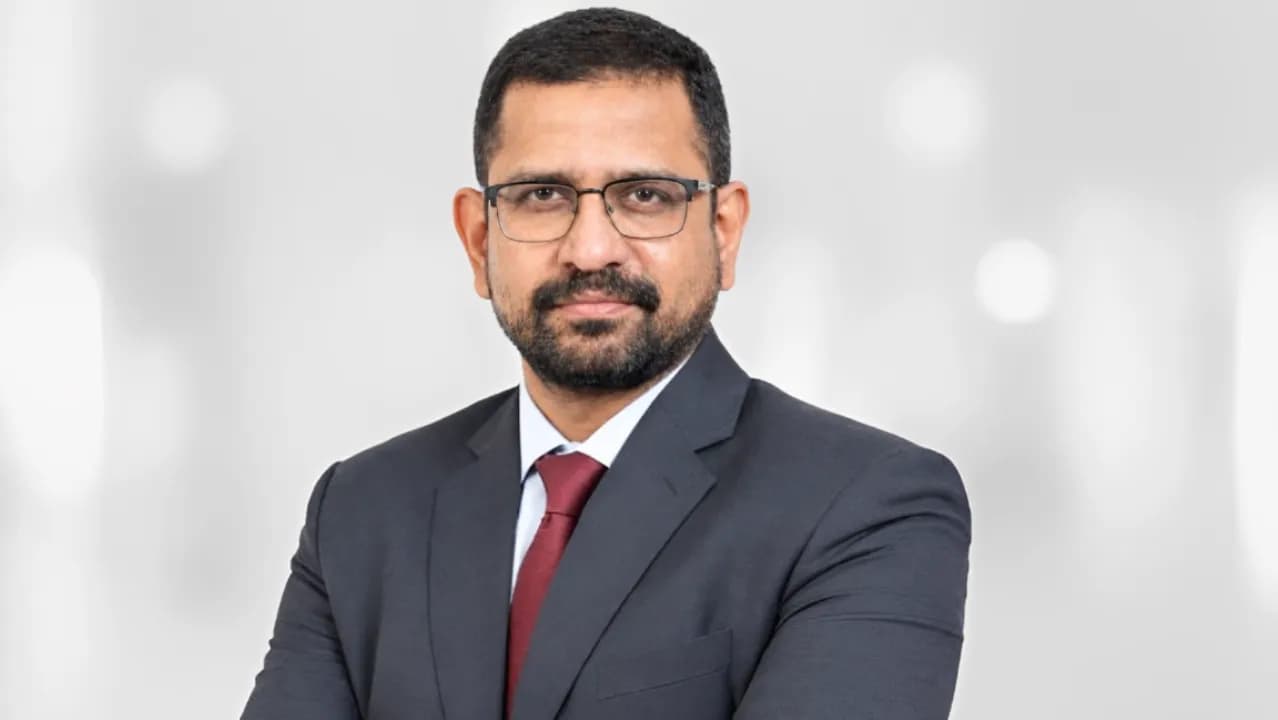
Chinmay Adhikari, Chief Human Resource Officer, CSB Bank
View all articles by Chinmay Adhikari →