
Srinivasa Bharathy on How AI-Powered HRMS Can Transform Employee Engagement
Advertisement
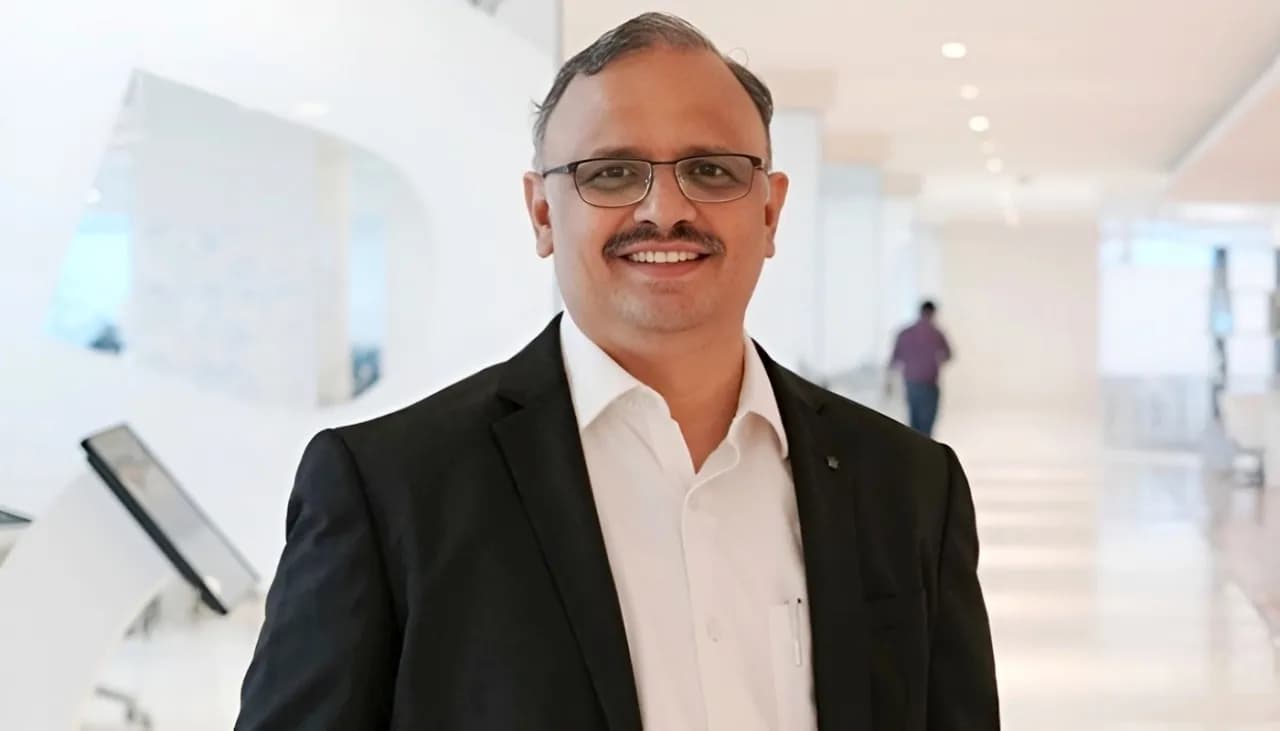

Srinivasa Bharathy is Managing Director & CEO of Adrenalin, a global HR technology and HRMS company that powers people strategies for over 2,000 enterprises and 3 million-plus employees across 70+ countries – including several GCCs navigating the shift from cost centres to innovation hubs.
Advertisement
With three decades of experience across enterprise software and SaaS, he has led digital transformation initiatives, scaled operations, and driven market expansion across India and global markets.
Q1. Where companies get employee engagement wrong—and how a modern HCM platform can close the feedback-action gap
The fundamental mistake is treating engagement as an annual measurement exercise rather than a continuous management discipline. Employees do not disengage because a survey was not conducted; they disengage when they repeatedly see that their feedback does not result in visible change.
The scale of the challenge is clear. Gallup’s State of the Global Workplace 2026 reports that only 20% of employees globally were engaged in 2025, with low engagement estimated to cost the global economy $10 trillion in lost productivity. That tells you engagement stopped being just an HR metric a while ago – it’s a business-performance number now.
Advertisement
Many organisations collect rich sentiment data, create dashboards, and stop there. A modern HCM Platform must close that loop. It should identify patterns, surface root causes, and trigger contextual actions for managers: a workload review where stress is rising, a career conversation where growth sentiment is falling, or a recognition nudge where teams feel invisible.
What matters isn’t the score on a dashboard – it’s how fast, how relevant, and how credible the organisation’s response is.
Q2. How can AI-powered HRMS platforms identify early signs of employee burnout, disengagement, or attrition, and what interventions have proven most effective?
AI can help make employee experience proactive rather than reactive. Burnout, disengagement and attrition rarely emerge from a single signal. They appear through patterns: persistent workload intensity, declining participation, unused leave, lower learning activity, unresolved manager check-ins, falling sentiment, or stalled career movement.
An AI-first HCM platform can connect these signals at an aggregate or team level and alert leaders to where support may be needed. But this only works if privacy, consent, transparency and human oversight are built in from the start. This isn’t about surveillance – it’s about catching problems early enough to help.
Advertisement
This matters especially for managers. Gallup found global manager engagement fell to 22% in 2025, down from 27% the previous year. When managers themselves are stretched, the quality of coaching, recognition and team connection inevitably suffers.
The most effective interventions remain deeply human: a timely manager conversation, reprioritising work, creating clarity of role, offering flexibility, enabling a career discussion, or connecting people to wellbeing resources. AI’s job is to flag the moment that matters. What happens after that is still down to the manager.
Q3. Employee experience spans from recruitment to exit. Which stage of the employee lifecycle do organizations most often overlook, and how can technology improve it?
Organisations invest heavily in attracting talent and increasingly in onboarding it. Yet the most overlooked stage is often internal growth and mobility – the period after an employee has settled in but before they begin looking outside.
Employees do not always leave because they dislike the organisation. Often, they leave because they cannot see their next chapter within it. They may not know which internal roles are available, what skills are needed to progress, or who can help them get there.
A skills-led HCM Platform can change this by creating an internal talent marketplace; matching employees to open roles, short-term projects, mentors and personalised learning pathways. It can answer three questions every employee is asking: Where am I today? What do I need next? What opportunities can I access here?
This isn’t just a retention play, either. Gallup’s research shows that highly engaged teams outperform lower-engagement teams on core outcomes, including profitability, productivity, absenteeism and customer loyalty. Internal mobility is where employee aspiration and organisational capability meet.
Q4. As Gen Z becomes a larger part of the workforce, how should HRMS platforms evolve to meet their expectations for personalized experiences, continuous feedback, and career growth?
Gen Z isn’t after superficial digital experiences. What they want is transparency, agency, immediacy and meaningful growth. They expect workplace technology to be as intuitive and personalised as the technology they use in daily life.
For HCM platforms, that means moving beyond transactional self-service. The experience must offer personalised learning, clear skills visibility, regular feedback, peer recognition, accessible career pathways and relevant opportunities delivered at the right moment.
Here’s a number worth sitting with: in the US, Gallup’s tracking shows only 46% of employees clearly know what is expected of them at work, down from 56% in 2020 (Gallup’s global role-clarity number isn’t published separately, but the US trend is a fair proxy for the direction most large organisations are seeing). For a generation that values clarity, purpose and continuous development, ambiguity doesn’t just frustrate – it disengages.
Annual appraisals on their own no longer cut it. What works better are platforms built for frequent, meaningful conversations between employees, managers and mentors. Technology should make development more continuous, but it must also preserve fairness, inclusion and trust.
(Role-clarity figure is a US data point from Gallup’s Q12 tracking, not the global 2026 report.)
Q5. Beyond engagement scores, what are the top three metrics HR leaders should track to measure employee experience, and how can HR technology convert those insights into business outcomes?
Beyond engagement scores, I would focus on three metrics.
First, internal mobility and career velocity: how effectively employees move across roles, projects and learning opportunities. This reveals whether the organisation is truly developing its people.
Second, manager effectiveness: the consistency and quality of goal-setting, feedback, recognition and development conversations. Managers are the ones who turn culture into day-to-day employee experience – or fail to.
Third, regrettable attrition risk: not simply who leaves, but which critical roles, skills and employee segments are vulnerable and why.
HR technology becomes strategic when it connects these insights to business outcomes. Gallup’s analysis shows top-quartile engagement teams deliver 23% higher profitability than bottom-quartile teams. Better mobility lowers external hiring dependence; stronger managers improve productivity and retention; earlier risk signals protect business continuity and institutional knowledge.
The point isn’t to generate more HR data. It’s to turn that intelligence into better business decisions.
(23% profitability figure is from Gallup’s Q12 meta-analysis, not the 2026 State of the Global Workplace report itself.)
Q6- Any final comments?
For enterprise businesses, employee experience needs to be treated as a measurable driver of growth, resilience and operating performance, not run as a standalone HR programme off to the side.
The outcomes are tangible: stronger employee experience can improve productivity, reduce regrettable attrition, accelerate internal mobility, strengthen leadership pipelines and enhance customer outcomes. Gallup’s research has consistently shown that highly engaged business units outperform lower-engagement teams, including delivering 23% higher profitability.
The opportunity for enterprise HR is to bring workforce data, skills intelligence, manager effectiveness and employee sentiment together in real time, instead of managing each in its own silo. This enables leaders to make earlier, more confident decisions: deploy talent where it is needed, address emerging workforce risks, build future-ready capabilities and create a more agile organisation.
The enterprises that pull ahead won’t just be the ones that digitise HR processes – they’ll be the ones that use technology to turn people insights into sustained business advantage, while keeping talent at the centre of HR operations, not on the periphery.
Thank you, Srinivasa!
About the Author
SightsIn Plus
SightsIn Plus is an India’s leading high-quality people-focused monthly HR Magazine and provides up-to-date HR News, Leadership Announcements, Best HR Practices and Insights by Global CHROs, CEOs, HR Advisors, Business Managers and HR Heads on topics of interest to HR professionals. To subscribe SightsIn Plus, HR Magazine please visit- https://sightsinplus.com/subscribe/
View all articles by SightsIn Plus →