
Harjeet Khanduja: Is Traditional Employee Engagement Losing Its Relevance?
Advertisement

Is the Traditional Employee Engagement Model Still Relevant?
Advertisement
I once complimented my Uber driver. “Your specs are really nice.”
He smiled and said, “Thank you. I am a fashion designer.”
“Then why are you driving an Uber? With your skills, you could easily get a job.”
“I will,” he replied. “But I prefer driving Uber.”
Advertisement
I was curious. “Why?”
His answer surprised me.
“Because I value peace of mind.”
Then he added, “The language of my managers made the decision easy for me.”
He had the skills. He had opportunities. He could return to his profession. Yet he had consciously chosen a different way of working. Not because he couldn’t find a job, but because he had found something he valued more.
Advertisement
Peace of mind.
For decades, we have thought about employee engagement through familiar levers including compensation, recognition, career growth, culture, benefits and engagement surveys.
But employees experience an organisation through their manager, workload, conversations, autonomy, flexibility and, most importantly, the way they are spoken to every day.
And the warning signs are getting stronger.
Gallup’s State of the Global Workplace 2026 reports that only 20% of employees globally were engaged in 2025, the lowest level since 2020. Even more worrying, manager engagement fell from 31% in 2022 to 22% in 2025. In India, only 23% of employees are engaged, down seven points from the previous three-year rolling average.
Because employees have more choices than ever before.
Earlier, leaving a manager often meant leaving the organisation. And moving to another organisation did not guarantee a better manager.
Technology has changed that equation.
The rise of the gig economy has created an entirely different proposition. Greater control over when, where and how people work.
India’s gig workforce grew from an estimated 2.5 million in 2012 to 7.7 million in 2021. NITI Aayog projects it could reach 23.5 million by 2030.
The significance is not merely the number of jobs.
It is the choice architecture that technology has created.
A person can now say, “I would rather have autonomy than a designation. I would rather have peace than a promotion. I would rather control my time than manage someone else’s expectations.”
That is a fundamental challenge to the traditional employee-engagement model.
Just one thing. Fix the managers.
Not through another engagement survey. Not through another employee-connect programme. You should treat engagement as an operating-system issue, not an HR programme.
You can do that by making managers better at the fundamentals. Listening, communicating, coaching, creating autonomy, giving feedback and designing meaningful work.
In one line, build manager capability.
About the Author
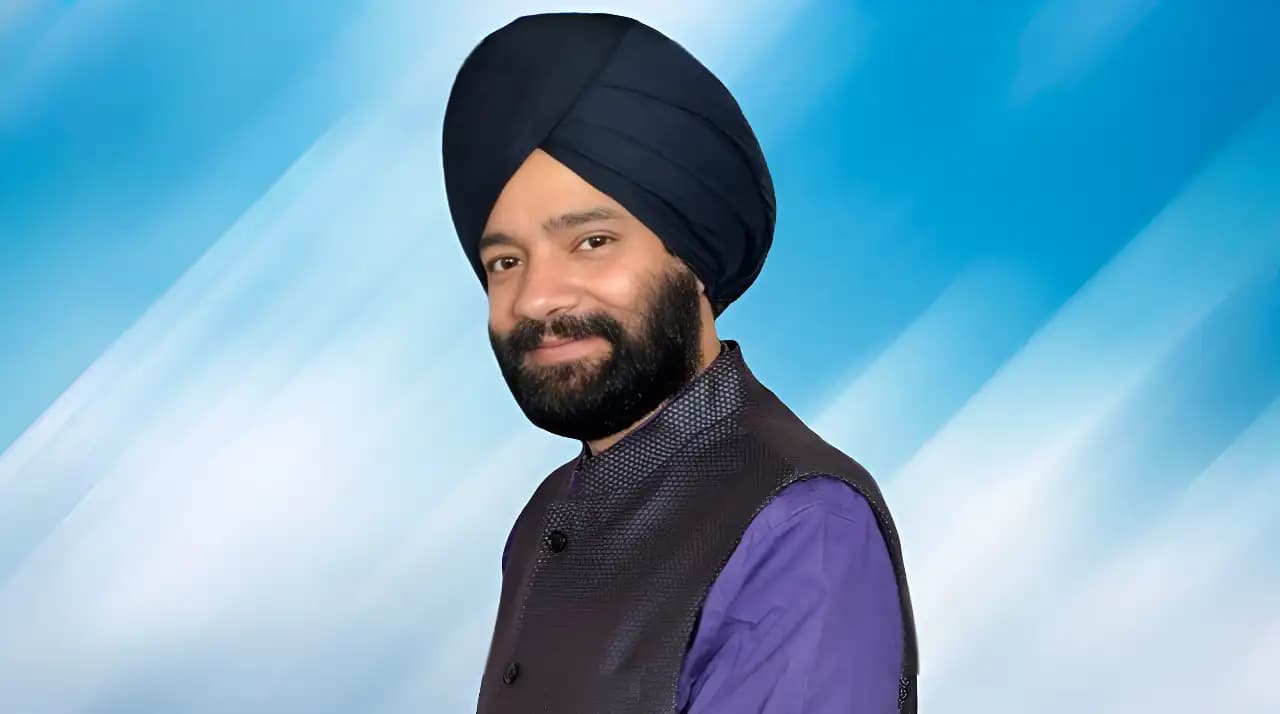
Harjeet Khanduja
Harjeet Khanduja is an international speaker, author, poet, influencer, inventor and an HR leader. He is also known as RK Laxman of Business. He is currently working as the Senior Vice President HR at Reliance Jio. He has 4 published patents and authored 7 books. His new book series HR Mastermind is being launched in January 2024. Harjeet has been a LinkedIn Power Profile, TEDx speaker, Guest Faculty at IIM Ahmedabad, Board Member of Federation of World Academics, Global Thought Leader, Global Digital Ambassador. Harjeet features in Top 200 Global Leadership Voices and ET Top 20 HR Influencers.
View all articles by Harjeet Khanduja →