
The Glassdoor Paradox: Building an Authentic Culture in an Era of Radical Transparency
Promoted


For a long time, I thought organisational culture was mostly a myth. It lived in town halls, on office walls and across careers pages. Words like trust, collaboration and “people first” sounded reassuring, but the real test was whether they survived a normal Tuesday when deadlines slipped, someone challenged a decision, a manager had to give difficult feedback, or an employee made a mistake.
Advertisement
What changed my mind was experiencing an organisation where culture showed up in those moments. That’s when I realised culture isn’t what a company says about itself. It is what people experience when nobody is presenting a slide about it. And today, those experiences rarely stay inside the organisation.
Culture Has Escaped The Building
Glassdoor is perhaps the most visible symbol of this shift. But there is a larger metaphor here.
The walls of the modern organisation are increasingly made of glass. Employees discuss managers, workloads, pay, career opportunities and leadership decisions. Former employees share their experiences. Candidates validate recruiter conversations through reviews, LinkedIn, personal networks and social media. Organisations may still own their culture. They no longer completely own the story about it.
Advertisement
That is the Glassdoor paradox. The more loudly a company talks about culture, the easier it becomes to see where reality does not match the promise.
Glassdoor did not make culture transparent. It made cultural inconsistencies searchable. You can curate a careers page. You cannot curate thousands of lived experiences.
From Stated Values To Observable Behaviour
This changes what culture means.
Advertisement
A company may have strong policies, leadership principles, recognition programmes and employee listening mechanisms. Yet inside one team, the experience can be completely different.
The manager shuts down dissent. People fear making mistakes. Strong performers are rewarded with more work. Employees hesitate to take leave. Everyone knows the company values, but nobody is quite sure they apply when pressure rises.
The problem is rarely the policy. It is the distance between company culture and team culture.
Nobody experiences an organisation in the abstract. They experience their manager, their team and the decisions that affect their everyday work.
A company may say it trusts its people. But if managers second-guess every decision, employees experience control. A company may say it encourages innovation. But if the mistakes are punished, people learn to play safe.
Culture therefore is moving from what organisations declare to what employees can repeatedly observe. Values become credible only when they show up in decisions, behaviours and everyday experiences.
Glassdoor Is Not The Problem. It Is The Mirror.
That creates an interesting question for HR leaders. When external reviews are negative, should the objective be to improve the rating — or understand the experiences producing the rating?
Perhaps we should stop looking at Glassdoor purely as an employer-brand channel and start seeing it as another culture-listening mechanism.
Employee surveys, exit interviews, attrition patterns, internal mobility, manager feedback and external reviews together create a more complete picture of organisational culture.
The question becomes less, “How do we manage the review?” and more, “What is the review telling us that we have not heard elsewhere?”
Radical transparency may be uncomfortable. But sometimes the mirror is useful.
AI Introduces A Second Test: Adaptability
Authenticity, however, is no longer the only challenge facing culture.
AI is changing work faster than traditional workforce planning can keep up with it. Skills are evolving. Roles are being redesigned. Some capabilities are becoming less valuable while entirely new ones emerge.
Organisations cannot simply hire their way through every new capability requirement.
It creates a skills paradox: companies need tomorrow’s skills before they know exactly what tomorrow’s jobs will look like.
That means competitive advantage may not belong to the organisation with all the right skills today. It may belong to the organisation whose culture continuously builds the skills it will need tomorrow. Upskilling is far more than an L&D programme. A genuine learning culture asks different questions.
Can employees admit they do not know something? Can they experiment without fearing failure? Do managers create stretch opportunities? Can people move across roles? Is learning rewarded? Can employees reinvent themselves before their role becomes obsolete?
Perhaps this is also creating a new employer–employee contract.
If employees give organisations adaptability, organisations must give employees employability.
From Talent Attraction To Talent Alignment
Radical transparency can also change how we think about employer branding.
The traditional objective has been to make more people want to work for the organisation.
But should every candidate want to?
An authentic culture should help people understand what they are opting into.
If an organisation genuinely moves fast, expects continuous learning, gives people autonomy and demands accountability, some candidates may decide it is “not” for them.
That is not necessarily a failure.
Transparency can help organisations shift from talent attraction to talent alignment.
The strongest cultures become both a magnet and a filter — attracting people who thrive in that environment while helping others self-select out.
In an age where curiosity, adaptability and the willingness to learn may matter as much as existing expertise, that alignment becomes increasingly valuable.
AI Is Also A Culture Question
We often discuss AI as a technology deployment. But many of the hardest questions it creates are cultural.
Is using AI encouraged, or quietly considered cutting corners?
Can employees challenge an AI recommendation?
Who remains accountable for the final decision?
Can someone admit they do not understand a new tool without appearing outdated?
If AI changes an employee’s role, does the organisation invest in reskilling them or simply replace the capability?
And when AI creates productivity gains, do people experience better work — or simply more work?
The AI-ready organisation will not simply be the one with the most tools. It will be the one where people feel able to experiment, question, learn and exercise judgement alongside technology.
AI can provide speed. Humans provide context.
AI can generate recommendations. Humans remain accountable.
AI can create scale. Humans bring empathy and judgement.
Technology should support the culture, not stand in for it.
Three Tests Of Culture
Perhaps the culture of the future needs to pass three simple tests.
- The Transparency Test: does what leadership promises match what employees experience?
- The Adaptability Test: can people continuously learn, evolve and reinvent themselves as work changes?
- And the Trust Test: can people speak honestly, question decisions, experiment, make mistakes and exercise judgement?
Managers sit at the centre of all three. Every manager is now simultaneously a culture carrier, talent developer and employer-brand creator. People speak up, and nothing changes; they eventually stop speaking. And the silence that follows can look remarkably like contentment on a dashboard.
Culture must be something people can see, experience and believe. The strongest employer brand will not belong to the company with the best story about its culture. It belongs to the company whose people can tell that story without being given a script.
About the Author
Prakash Ramnath
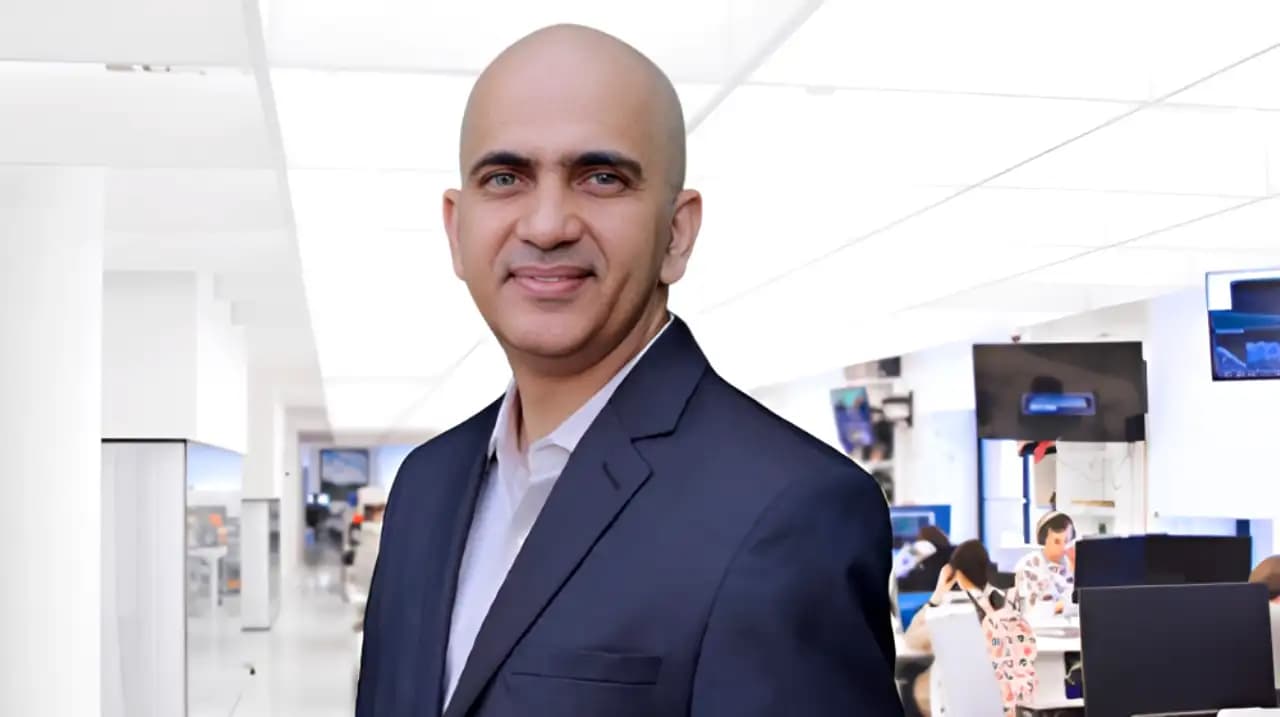
Prakash Ramnath, SVP–Global Marketing & Alliances at Adrenalin, leverages 20+ years in SaaS and AI to build brands, scale ecosystems, and drive AI-powered growth and innovation.
View all articles by Prakash Ramnath →