
Surat Textile Industry Faces Labour Tensions Over Wages and Work Hours
Advertisement


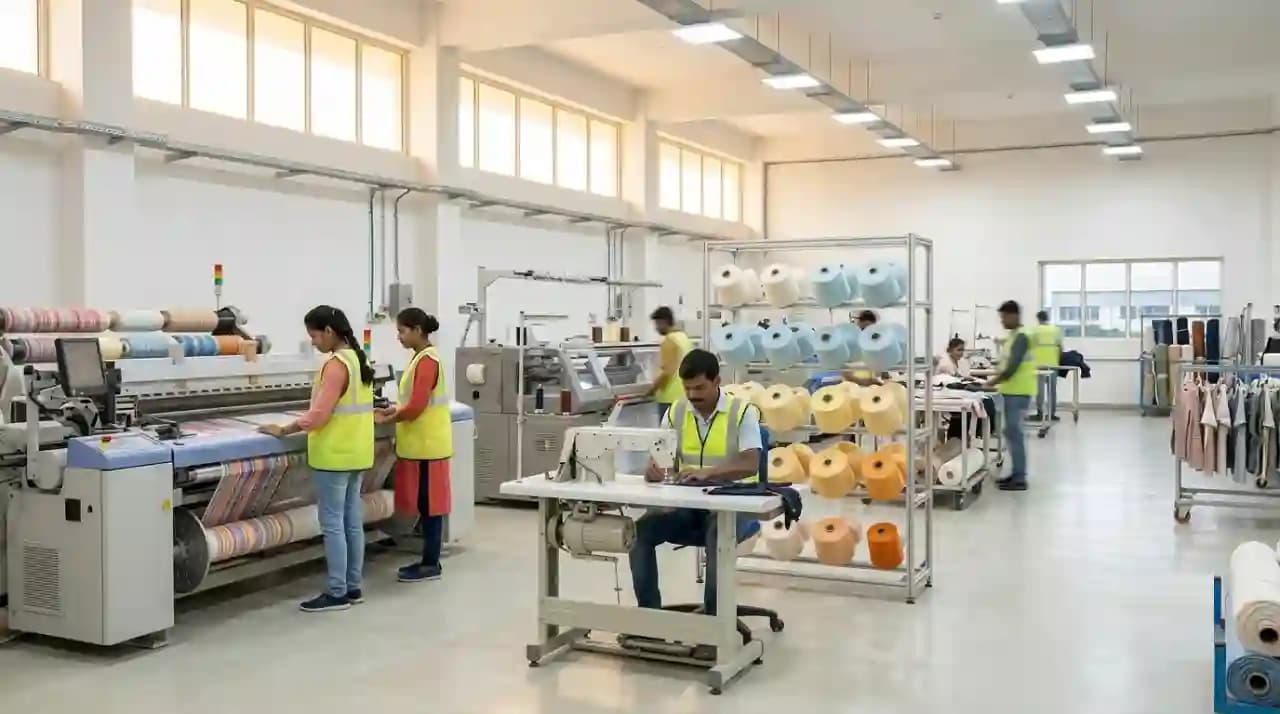

Weaving units across Surat continue to operate without disruption even as a nearly three-month dispute between embroidery workers and unit owners over working hours, wages and weekly holidays remains unresolved. Industry representatives have attributed the stability in weaving units to production-linked wages, regular worker engagement and weekly leave.
Advertisement
Surat, one of India’s largest man-made fabric manufacturing hubs, has a daily production capacity of around six crore metres and employs approximately 15 lakh workers across weaving, embroidery, processing and related activities.
Embroidery Workers Demand 8-Hour Shifts and Paid Weekly Holidays
Embroidery workers are demanding eight-hour shifts with wages equivalent to those paid for 12-hour shifts. They are also seeking paid weekly holidays, citing long working hours and the absence of regular days off in many embroidery units.
According to industry estimates, embroidery workers earn an average of around ₹30,000 a month. Industry representatives said earnings in weaving and embroidery are broadly comparable when measured against production output.
Advertisement
However, the two segments operate differently. Weaving units generally continue production throughout the year, including during periods of weak demand. Embroidery work, on the other hand, depends more heavily on incoming orders, resulting in variations in production and working hours.
Temporary stoppages in embroidery units can lead to layoffs, while periods of high demand may require overtime work.
Weaving Industry Cites Production-Linked Wages
Weaving industry in Surat representatives said production-linked wages and regular communication between employers and workers have helped maintain operations.
Advertisement
Vijay Mangukiya, a weaving unit owner in Amroli, said workers are paid according to the metres of fabric produced, with rates varying by fabric type. He added that workers receive a weekly day off when shifts change.
Umesh Vekariya, president of the Jolwa Industrial Association in Kadodara, said units in the area provide a weekly day off on Thursdays because of power staggering. He also said employers discuss workers’ concerns and try to resolve them through mutual agreement.
The Federation of Gujarat Weavers’ Welfare Association has urged its members to avoid confrontation and resolve workplace concerns through discussions.
The continuing dispute highlights differences in working arrangements between weaving and embroidery units. While employers point to production requirements and cost considerations, embroidery workers continue to seek shorter shifts, paid weekly holidays and clarity on wage arrangements.
HR Perspective
The dispute highlights the need for clear working-hour policies, transparent wage structures and regular weekly rest in labour-intensive industries. Employers must address production requirements while ensuring that workplace practices comply with applicable labour laws.
Regular discussions with workers, clear overtime policies and transparent communication on wages and leave can help employers address grievances before they develop into prolonged industrial disputes.
About the Author
Sheetal Singh
Sheetal Singh, Senior News Journalist, SightsIn Plus
View all articles by Sheetal Singh →