
Mark Zuckerberg’s AI Manifesto: 5 Key Takeaways on Artificial Intelligence
Advertisement
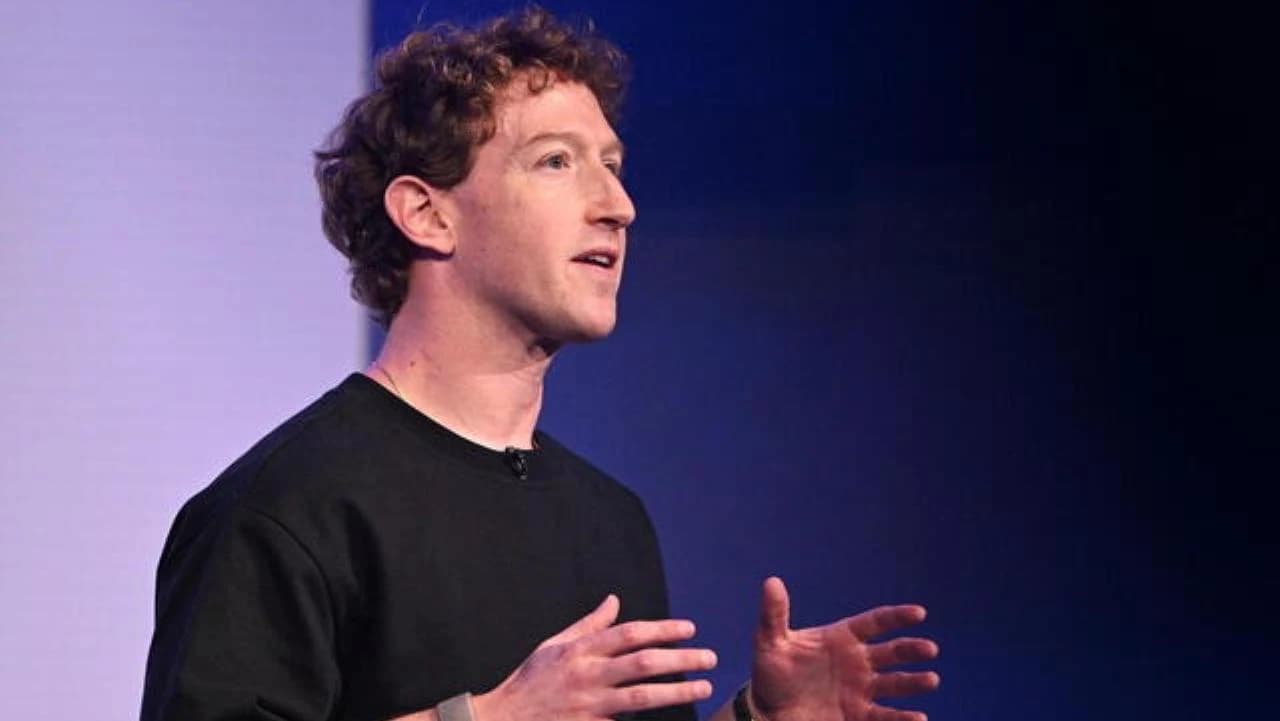

Meta Platforms CEO Mark Zuckerberg has outlined his views on the future of artificial intelligence in a 6,500-word essay, arguing that wider access to AI will be important for the technology to develop.
Advertisement
The essay focuses on the need to avoid excessive concentration of AI power, the role of open AI models, the impact of AI on jobs, investment in communities around data centres and the growing technology competition between the US and China.
Zuckerberg also questioned the idea that advanced AI should be controlled by a small number of companies or institutions.
The notion that AI is so dangerous that the only safe path is an extreme concentration of power seems inherently problematic.
Advertisement
Here are five key takeaways from Zuckerberg’s essay.
1. Meta continues to support open AI models
Meta has for several years supported the idea of making AI models available to developers so they can download, study and modify them. The company’s Llama family became a major part of this strategy after its launch in 2023.
However, Meta has recently increased its focus on developing more advanced models that could remain proprietary and be offered as paid products. The company has also created Meta Superintelligence Labs and brought together a new team of AI researchers.
Advertisement
Zuckerberg’s latest essay indicates that Meta has not completely moved away from open AI. He mentioned “open source” repeatedly while discussing the need for US leadership in artificial intelligence.
Meta has also announced Muse Glimmer, a new open-weight AI model. Developers can download and modify its model weights, although the complete technology and training process behind the system are not publicly available.
Meta also plans to make the weights of a version of its more advanced Muse Spark model available.
2. Concentration of AI power could create risks
Zuckerberg warned that allowing a small group of companies or governments to control advanced AI could create an imbalance of power.
He argued that wider access would allow more organisations and individuals to participate in AI development and create greater competition.
This is not a technological principle. It is about the balance of power.
According to Zuckerberg, AI should not be developed around the assumption that one organisation can safely control the most powerful systems on behalf of everyone else.
There is no such thing as a singular benevolent superintelligence.
His argument comes as major AI companies such as OpenAI and Anthropic continue to develop increasingly powerful systems while maintaining tighter control over access to their technologies.
3. AI could create more businesses and new jobs
Zuckerberg rejected the view that AI will necessarily lead to fewer jobs overall.
Instead, he expects AI to make it easier for individuals to start businesses and operate with smaller teams. In his view, a future economy could have more companies, with each organisation employing fewer people because AI will handle a larger share of the work.
He also believes individuals could use AI as a highly capable personal learning and productivity assistant.
People also continually come up with new ideas to make our lives better and new jobs to bring those ideas to life.
Zuckerberg expects new types of jobs to emerge as people find new applications for AI.
His comments come at a time when Meta itself has reduced its workforce as part of its increased focus on artificial intelligence.
4. Meta announces $1 billion fund for data-centre communities
Alongside the essay, Meta announced a $1 billion fund to support communities where the company operates data centres.
The move comes amid increasing concerns in the US about the local impact of large AI data centres. Such facilities require significant amounts of electricity and water, raising concerns about pressure on local infrastructure and resources.
Zuckerberg said communities should see direct benefits from investments in AI infrastructure.
Sustainable infrastructure development means that communities must benefit significantly from each project.
He said these benefits could include better-paying jobs, support for schools and investment in public services.
One example cited by Zuckerberg is Richland Parish in Louisiana, where Meta is developing a major data centre. According to him, increased tax revenue from the project has supported a $50,000 bonus for local teachers.
5. Zuckerberg warns about the US falling behind China
Zuckerberg again highlighted China as a major technology competitor to the US.
He argued that the US needs to move faster in AI development, including building the infrastructure required to support increasingly powerful AI systems.
American communities will have greater prosperity and security if America and its allies lead in AI compared to geopolitical rivals.
Zuckerberg also said that building infrastructure in the US is more difficult than in China, making faster execution important for maintaining America’s position in AI.
He supported US restrictions on the export of advanced AI chips and related technology to China, arguing that these measures have slowed the progress of foreign AI laboratories.
Export controls on silicon have been successful for slowing the progress of foreign labs during this critical period.
What Zuckerberg’s vision means
Zuckerberg’s essay presents a future in which AI is broadly available rather than controlled by a limited number of organisations. His arguments combine Meta’s support for open AI models with a strong focus on personal AI, smaller businesses, new jobs and wider access to technology.
At the same time, his comments show that the global AI race is increasingly linked to infrastructure, regulation, jobs and national competitiveness, with the US-China technology competition remaining a major concern.
About the Author
SightsIn Plus
SightsIn Plus is an India’s leading high-quality people-focused monthly HR Magazine and provides up-to-date HR News, Leadership Announcements, Best HR Practices and Insights by Global CHROs, CEOs, HR Advisors, Business Managers and HR Heads on topics of interest to HR professionals. To subscribe SightsIn Plus, HR Magazine please visit- https://sightsinplus.com/subscribe/
View all articles by SightsIn Plus →