
Beyond Hiring: Connecting Talent Acquisition With Succession Planning
Advertisement

For years, organisations have treated hiring and succession planning as two different conversations.
Advertisement
Talent Acquisition asks: “Who do we need now?”
Succession planning asks: “Who will lead us tomorrow?”
But in an environment being reshaped by AI, automation, new business models and rapidly changing skills, I believe these two questions can no longer be addressed independently.
The real question organisations need to ask is:
Advertisement
“What capabilities will our business need to keep running, growing and transforming—and how do we ensure continued access to them?”
That changes talent planning significantly.
Having spent years on the enterprise side and now working closely with organisations through TalentOnLease, I have seen an interesting paradox: companies can have thousands of employees and still struggle when one critical person leaves. They can simultaneously have people on the bench and open positions they cannot fill.
The problem, therefore, is not always the number of people.
Advertisement
It is often the availability and continuity of the right capability.
Start With Business Continuity, Not Vacancies
Most hiring processes begin when a vacancy is created.
A resignation happens. A new project is approved. A customer requirement arrives. A manager raises a requisition.
Talent Acquisition then starts looking for candidates.
By that point, the organisation is already reacting.
Long-term talent planning should begin much earlier by asking which capabilities are essential for the organisation’s current operations and future strategy.
For every important business function, organisations should understand:
What capabilities are critical? Who possesses them today? How difficult would they be to replace? What happens if that capability becomes unavailable tomorrow?
This is particularly important in technology.
A business-critical application may technically be supported by a team of ten people, but perhaps only two people truly understand its architecture. A transformation programme may depend heavily on one cloud architect. A major customer relationship may rely disproportionately on one delivery leader.
An organisation chart rarely reveals these dependencies.
A capability map does.
Identify Critical Roles—and Critical Knowledge
Succession planning has traditionally concentrated on senior leadership positions.
That remains important, but organisations today need to think beyond hierarchy.
Some of the most critical people in an organisation may not have senior designations at all.
They may be architects, product specialists, cybersecurity experts, data engineers, project managers, customer-facing specialists or people possessing years of institutional knowledge.
This means organisations need to identify not only critical positions, but also critical knowledge and capabilities.
A simple test is:
“If this person were unavailable for the next 90 days, what would stop, slow down or become significantly riskier?”
The answer often identifies dependencies that conventional succession planning misses.
Build More Than One Successor
Another common weakness is treating succession as identifying one person for one role.
That creates another single point of dependency.
A stronger approach is to build a talent pipeline around critical capabilities.
For every business-critical role or capability, organisations should ideally know:
- Who is ready now?
- Who could become ready with development?
- Can someone internally move into the role?
- Can the capability be accessed externally if required?
- Is the knowledge sufficiently documented and transferable?
This connects succession directly with learning, internal mobility and Talent Acquisition.
TA should know which capabilities have weak internal succession pipelines long before a vacancy appears.
Make Talent Acquisition a Strategic Sensor
Talent Acquisition sits at a very interesting intersection.
TA teams continuously see what skills organisations are demanding, what talent is available in the market, what candidates expect, which capabilities command premiums and which skills are becoming difficult to find.
That information should not remain confined to recruitment dashboards.
It should feed directly into workforce strategy.
For example, if an organisation discovers that a particular technology capability takes six months to hire externally, that capability deserves different succession and retention planning from one readily available in the market.
Similarly, if emerging skills are becoming strategically important but the organisation has little internal expertise, the answer may not simply be to recruit more people.
It may be to hire, develop, partner and access capability simultaneously.
Move From Headcount Planning to Capability Planning
This becomes even more important in the AI era.
Historically, business growth often translated into workforce growth.
More business meant more projects. More projects meant more people.
AI is beginning to challenge that equation.
Tomorrow’s workforce planning may therefore be less about:
“How many people do we need?”
and increasingly about:
“What capabilities do we need, when do we need them, and what is the best way to access them?”
Some capabilities should unquestionably remain inside the organisation because they represent strategic knowledge, competitive advantage or long-term continuity.
Others may be required only during transformation programmes, product launches, implementations or periods of peak demand.
Organisations therefore need a portfolio approach to talent—combining permanent employees, internal mobility, development, partners, specialists and on-demand talent.
The objective should not be to own every capability permanently.
The objective should be to ensure that critical capability is available when the business needs it.
Make Knowledge Transfer a Business Discipline
Succession planning is incomplete if knowledge remains trapped inside individuals.
Every critical role should therefore have some mechanism for knowledge continuity—documentation, shadow resources, cross-training, mentoring or structured handovers.
This is particularly important when people work on complex systems for many years.
When such employees leave, organisations sometimes discover that what departed was not simply one employee.
It was ten years of undocumented organisational knowledge.
Knowledge transfer should therefore happen continuously, not during an employee’s notice period.
Create a Talent Continuity Dashboard
Boards and leadership teams track revenue pipelines, cash flows, customer concentration, cybersecurity risks and operational risks.
Critical talent deserves similar visibility.
HR leaders should be able to show management where the organisation has significant talent concentration risk.
A practical talent continuity dashboard could highlight critical capabilities, number of people possessing each capability, succession coverage, readiness of successors, external availability, attrition risk and time required to replace or develop the skill.
This changes the HR conversation.
Instead of reporting only hiring numbers, attrition and headcount, HR begins discussing business continuity through talent.
The Future Is a Talent Ecosystem
No organisation can permanently employ every capability it may eventually require.
The speed of technological change makes that increasingly impractical.
This is one reason I believe the future belongs to organisations that build strong talent ecosystems and capability networks around themselves.
At TalentOnLease, we see this firsthand. Organisations often do not need another permanent employee; they need access to a particular capability for three months, six months or perhaps even a few weeks.
Equally, companies sometimes have capable people temporarily underutilised while another organisation desperately needs exactly those skills.
Connecting these pools intelligently can create a far more flexible talent economy.
From Hiring Success to Talent Continuity
Ultimately, Talent Acquisition should not be measured only by how quickly a vacancy was filled.
The bigger measure is whether the organisation has built the capability to execute its strategy without being dangerously dependent on individual people.
That requires HR, Talent Acquisition, business leaders, L&D and workforce partners to operate as parts of one system.
Hire for today’s requirement. Develop for tomorrow’s capability. Build successors for critical knowledge. Create external networks for capabilities you do not need to own permanently.
The organisations that do this well will not simply have better succession plans.
They will have something far more valuable:
Talent continuity—the ability to keep operating, adapting and growing even as people, skills and technologies change.
About the Author
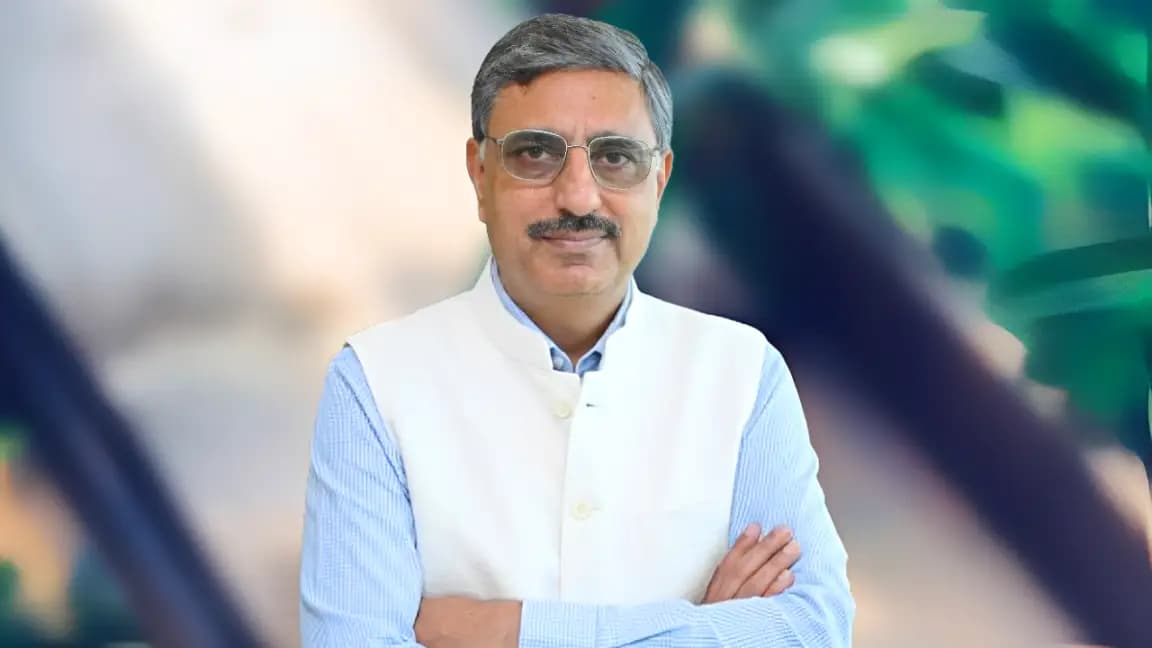
Daya Prakash
Daya Prakash is Founder of TalentOnLease, an AI-powered tech hiring platform enabling enterprises to connect with top-tier technology talent within 24–48 hours. Previously, he served as CIO at LG Electronics India, driving large-scale digital transformation and enterprise technology initiatives.
View all articles by Daya Prakash →