
The AI Age Is Changing Who Gets Hired—and Why
Advertisement

A few months ago, I sat across the table from a young candidate while hiring who had all the credentials recruiters are traditionally taught to admire – a prestigious degree, impressive brands, and polished answers to every interview question.
Advertisement
Later that week, I met another candidate. His resume was far less glamorous. He came from a humble background, had learned largely on his own, took initiatives out of curiosity, and spoke with genuine excitement about solving problems rather than simply landing the job.
Years ago, the decision might have been obvious. Today, it isn’t. Because the world of hiring has changed.
We are living through one of the biggest transformations the workplace has ever seen. Artificial Intelligence is reshaping jobs faster than organisations can redesign them. Global uncertainty is forcing businesses to become more agile.
Industries are converging, skills are evolving at unprecedented speed, and competitive advantage increasingly comes not from what people know today, but from how quickly they can learn tomorrow.
Advertisement
The World Economic Forum’s Future of Jobs Report 2025 estimates that nearly 39% of today’s core workplace skills will change by 2030.
It also identifies analytical thinking, resilience, flexibility, curiosity and lifelong learning among the fastest-growing capabilities employers will seek in the coming years. This fundamentally changes what organisations should look for when they hire.
From Skills to Learning Agility: Redefining Talent Assessment
For decades, hiring often revolved around familiar proxies – premier institute tags, renowned employers, or industry pedigree. While these achievements continue to matter, they are no longer sufficient indicators of future success. Increasingly, organisations are shifting towards skills-based hiring.
The technology industry offers perhaps the clearest example. Several leading organisations now conduct a significant portion of their graduate developer hiring through coding challenges, hackathons and practical problem-solving assessments instead of relying exclusively on campus recruitment.
Advertisement
Such approaches reward genuine capability and passion for building technology rather than mere credentials. They also help identify students who see software engineering as a long-term calling, not merely a stepping stone to another career.
At Hilti India, we have consciously embraced this evolution. Our flagship programs like the Global Outperformer Program continue to attract exceptional students from leading institutions across the world.
However, what differentiates our process is not where these candidates come from, but how we assess them. Over several months, participants experience multiple stages that include business case studies, interactions with senior leaders and, wherever feasible, field immersion with our sales teams.
This allows candidates to understand our culture, our customers and the realities of the role long before they receive an offer. Equally important, it allows us to assess qualities that rarely appear on a résumé – curiosity, adaptability, collaboration and the willingness to learn.
The rise of AI has reinforced another important lesson. When a Python developer can become a React developer in a matter of days and weeks, specific technologies or methods inevitably have a shorter shelf life.
What endures are conceptual understanding, structured thinking and the ability to continuously acquire new skills. Hiring for today’s technical expertise alone is no longer enough; organisations must hire for tomorrow’s learning potential.
Breaking Hiring Biases to Build Future-Ready Teams
This shift also requires organisations to challenge their own unconscious biases. One pattern we have often observed is that hiring managers naturally gravitate towards finding someone who resembles the person currently performing the role.
While understandable, this can unintentionally narrow the talent pool and limit fresh perspectives. At Hilti India, we encourage a different conversation. Before beginning a search, hiring managers are asked to distinguish between the role’s “Must Haves” and “Good to Haves.”
The distinction is simple but powerful. Must Haves represent the few essential capabilities without which success would be difficult. Good to Haves are experiences or industry familiarity that may shorten the learning curve but can certainly be developed over time.
This framework has helped us make more balanced hiring decisions while building teams equipped not only for today’s business, but for tomorrow’s challenges. Perhaps nowhere has this philosophy delivered greater value than in our field sales organisation.
Rather than limiting ourselves exclusively to candidates from the construction industry, we have welcomed professionals from across sectors, including even SaaS and EdTech, many of whom have gone on to become outstanding performers and leaders.
They bring different ways of engaging customers, solving problems, and challenging conventional thinking. Diversity of experience often brings Diversity of Thought.
Hiring for Potential, Investing in Growth
Ultimately, hiring is no longer about finding the perfect fit. In reality, the perfect fit is a moving target. Instead, organisations must identify individuals with the potential, resilience and learning agility to grow alongside the business.
This philosophy extends well beyond external recruitment. At Hilti India, more than 80% of our leadership positions are filled internally. Through our MOMENT approach, we focus on recognising individual strengths, believing that every employee brings a unique perspective capable of creating value.
That is why we continue to invest in our own people before looking outside. When we do hire externally, conversations with senior leaders increasingly resemble career coaching sessions rather than traditional interviews.
We believe candidates deserve clarity – not just about the role they are accepting today, but about the opportunities they can build over the years ahead.
The future belongs not to those who have already done the job, but to those who dare to embrace it.
Hiring has changed. Thankfully, so have we.
Note: We are also on WhatsApp, LinkedIn, and YouTube to get the latest news updates. Subscribe to our Channels. WhatsApp– Click Here, YouTube – Click Here, and LinkedIn– Click Here.
About the Author
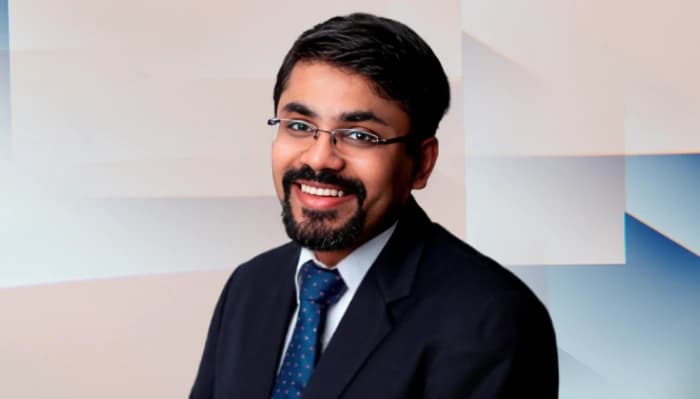
Saurabh Bansal
Saurabh Bansal is a seasoned HR leader with over 13 years of experience across sectors such Energy, IT, Logistics, and Construction. He brings deep expertise in business partnering, talent management, organizational transformation, and HR digitalization, with a strong track record of leading both large-scale workforce initiatives and critical talent strategies across corporate and manufacturing environments. An XLRI alumnus with a degree in Engineering from Delhi College of Engineering, Saurabh currently serves as Head – Talent Acquisition at Hilti India, driving talent strategy for one of the world's leading construction solutions companies.
View all articles by Saurabh Bansal →