
Hiring Has Shifted from Headcount to Outcomes: Sahil Mathur, CHRO, Licious
Advertisement
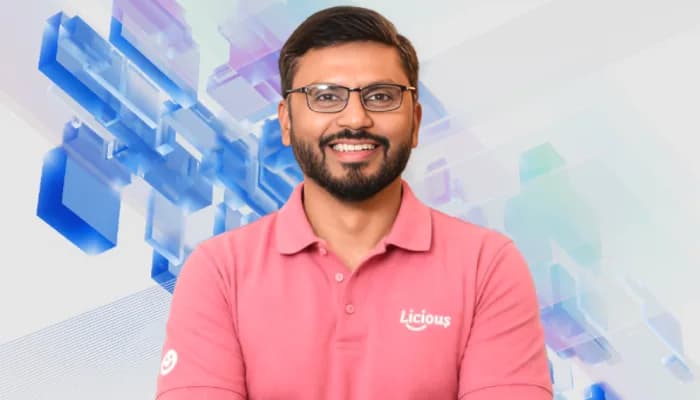

We had the opportunity to interact with Sahil Mathur, CHRO (People & Culture), Licious. Sahil leads the people strategy at Licious, driving talent, leadership development, organisational design, and culture to support business growth and employee experience.
Advertisement
Previously, he served as CHRO at InMobi and held senior HR leadership roles at Meta and Google, where he built high-performing teams and scaled HR functions globally.
An MBA from ISB, Sahil is recognised for his people-first leadership and has received the ISB Torch Bearers & Young Leaders Award.
Q1. What is the biggest shift you see in talent acquisition strategy today?
The biggest shift is that hiring has stopped being a headcount exercise and has become an outcome exercise. Earlier, the instinct at scale was simple – add people to drive growth.
Advertisement
We’ve consciously moved away from that towards what I call productivity planning – start with the business outcome you need, then work backwards to the right mix of people, process, and technology.
That changes everything about how you hire, as you’re no longer just filling a seat – you’re building capacity for a specific result. It also means talent acquisition can no longer sit at the end of the funnel; it has to sit at the table where business strategy is being shaped, whether that’s a new city launch or a new product line.
Q2. How do you balance hiring for immediate business needs with building long-term talent pipelines?
We treat these as two different clocks running in parallel, not competing priorities. The immediate need is solved through structured, fast-but-rigorous hiring – our engineering tests and real-world case studies exist precisely so speed never comes at the cost of quality.
Even an urgent hire is expected to strengthen bench strength for the next 2-3 levels, not just plug a gap.
Advertisement
For roles that recur predictably – say, finance leaders or ops managers we know we’ll need over the next 18 months – we treat that as a standing pipeline – structured sourcing and light-touch relationship-building with passive candidates, rather than starting from zero each time.
The long-term pipeline itself is built through early-career programs, leadership rotations, internal mobility that bring in ‘our kind’ of talent, and a strong employer brand around roles we’ve redefined with dignity – delivery heroes, meat technicians, meat artists. We protect these as fixed costs, not discretionary spends, even under pressure.
We also invest disproportionately in the first 30–45 days of a frontline hire’s journey because that early investment compounds into a stronger internal pipeline three to five years down the line.
Q3. What role should AI play in the future of talent acquisition?
AI should sit close – however it should not have the power to replace the judgment. At Licious, we’re using it to strengthen our applicant tracking systems, identify which sourcing channels and profiles actually convert into successful hires, and flag early signals of fit and engagement from HRMS data.
There are specific places where the unlock is real. Sourcing and matching at scale is one – parsing thousands of profiles against nuanced criteria is genuinely hard for humans to do consistently, and this is where AI earns its keep, especially for high-volume or hard-to-fill roles.
It also helps reduce admin drag such as scheduling, first-pass resume screening, JD drafting, interview note synthesis – the stuff that eats recruiter time without actually needing human judgment.
There’s also real value in structured signal extraction – summarizing interview feedback across panels, flagging inconsistent evaluations, or highlighting when a scorecard’s ratings don’t match the written comments.
A good AI check, for instance, would have flagged if a ‘strong hire’ recommendation didn’t align with the concerns actually documented. And done well, it can reduce certain types of bias – standardized initial screening can cut down on the inconsistency you sometimes see between different recruiters’ first impressions.
No algorithm can substitute the human judgment of reading resilience, values, and cultural fit – and I don’t think it should try to.
Q4. How do you measure the success of a modern hiring strategy beyond time-to-fill at Licious?
Time-to-fill often tells you speed, not quality, so we deliberately look further. We track early attrition and ramp-up velocity – how fast a new hire reaches full productivity.
We look at referral strength as a proxy for cultural fit, and case study and test performance as a proxy for on-the-job readiness.
Increasingly, we tie hiring metrics back to business outcomes – output per shift, quality error rates, revenue per employee – because a hiring strategy that fills roles but doesn’t move these numbers hasn’t really succeeded.
The real test is whether the person we hired is thriving and contributing a year in, not whether the requisition closed quickly.
Q5. How can onboarding become a strategic lever for employee engagement and retention?
Onboarding is the first promise an organisation keeps or breaks. We learned this directly – our early onboarding got people earning quickly, but it didn’t build the technical grounding or belonging that keeps someone invested for years.
When we redesigned it into a 30- 45-day immersive journey – heavy on hands-on learning, mentorship, and understanding the ‘why’ behind the work – engagement and quality both improved.
Well-done onboarding tells an employee they’re being invested in from day one, not just processed. That emotional deposit is what retention is built on, and you can’t buy it back later with a bonus.
Q6. What should organisations rethink about onboarding in a fast-changing business environment?
Most organisations still design onboarding for compliance – sign the papers, complete the checklist, start work. That’s a mistake, especially in businesses like ours where quality is embedded at the point of execution.
Onboarding needs to be rethought as capability-building, not paperwork – the difference between a person who can do a job and one who deeply understands why it matters. It also needs to flex by role – a corporate hire, a delivery hero, and a meat technician cannot go through the same journey.
It also needs deliberate design around relationships, not accident – who a new hire connects with early on shouldn’t be left to chance. And it needs enough psychological safety for someone to say ‘this doesn’t make sense yet’ without it counting against them.
The pace of business change means onboarding itself has to be treated as a living system, revisited as often as the business strategy is.
Q7. As Licious completes 11 years of building a people-first organisation, could you share an employee journey that reflects this commitment?
One story I’m particularly proud of is a Lician who joined us as a Packing Associate and, through consistent learning, mentorship, and internal mobility, moved into a senior corporate role in under five years – the shop floor to head office isn’t a slogan for us, it’s a lived pathway.
Equally meaningful is how we’ve challenged convention in an industry that hasn’t traditionally made space for women – enabling women to become meat technicians and grow frontline roles like packers and delivery executives into leadership positions.
These journeys capture what ‘people-first’ means at Licious – dignity in every role, and a real, visible ladder from it.
Q8. Any final comments?
Eleven years in, the biggest lesson for me is that people strategy and business strategy were never two separate things – it just took us a while to say that out loud.
Strategies change, positions change – it’s the people, the culture and the values that don’t. And that’s exactly why people matter most, because they’re the ones who build the strategies, the visions, and the execution models that in turn build companies. At Licious, we follow this.
Whether it’s how we hire, onboard, or build careers, the throughline has always been the same – give people real investment and real dignity, and the business outcomes follow. That’s the philosophy we’ll keep building on for the next few years.
Thank you, Sahil!
Note: We are also on WhatsApp, LinkedIn, and YouTube to get the latest news updates. Subscribe to our Channels. WhatsApp– Click Here, YouTube – Click Here, and LinkedIn– Click Here.
About the Author
SightsIn Plus
SightsIn Plus is an India’s leading high-quality people-focused monthly HR Magazine and provides up-to-date HR News, Leadership Announcements, Best HR Practices and Insights by Global CHROs, CEOs, HR Advisors, Business Managers and HR Heads on topics of interest to HR professionals. To subscribe SightsIn Plus, HR Magazine please visit- https://sightsinplus.com/subscribe/
View all articles by SightsIn Plus →