
InsuranceDekho CHRO on What Happens When Employees Ask: What’s Next?
Advertisement
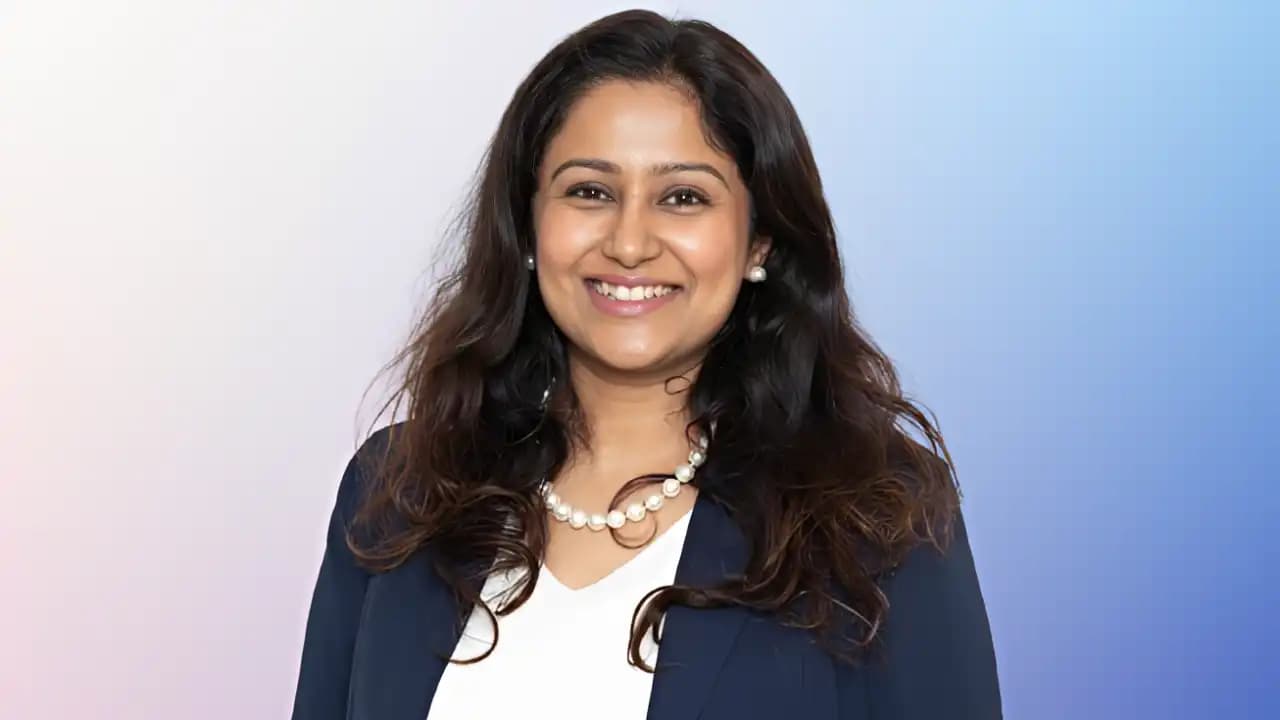

Rendezvous with Divya Mohan, Chief Human Resources Officer, InsuranceDekho
Advertisement
Divya is an experienced HR leader with a career spanning financial services, technology, hospitality, automotive, retail, wellness and FMCG. At InsuranceDekho, she leads Human Resources and is responsible for the company’s people and talent agenda.
Before InsuranceDekho, Divya was part of the HR leadership teams at Innovaccer and OYO, where she supported high-growth businesses across India and Southeast Asia.
Earlier, she spent several years at Volvo-Eicher Commercial Vehicles, where she led talent management, total rewards and HR strategy, while also serving as HR Head for Sales and Marketing, International Business, Finance and IT. Her work covered succession planning, leadership development, performance management, workforce analytics, compensation and HR digitisation.
Before VECV, Divya led talent management at VLCC and OD and talent management at Jubilant FoodWorks. She began her career with Mahindra & Mahindra, working across corporate and factory HR roles.
Advertisement
Q1. How does InsuranceDekho support employees in planning and building their careers?
Career conversations at InsuranceDekho do not sit only in an annual review. A manager may see someone ready to handle a larger team; an employee may want to build deeper expertise, try another function or return after a break. Our job is to respond with practical next steps rather than a one-size-fits-all answer.
ID Gurukul gives employees a place to start. It offers functional, behavioural, leadership and regulatory learning across career stages. GROW, our internal job-posting policy, lets eligible employees look beyond their current team and explore roles elsewhere in the organisation.
For tele-sales employees, Saksham lays out what it takes to move from Tele-Sales Advisor to Senior Advisor, Team Leader and Manager. The criteria are visible: performance, quality, discipline and readiness all count. Protsahan supports employees and managers through regular conversations when performance needs attention.
We are equally mindful that careers can take a pause. SWRA, or She Will Rise Again, supports women returning to work after a break. The Boomerang initiative gives former employees an avenue to come back when there is a suitable opening.
Advertisement
People should be able to see a future here, understand their next role and get honest support as they prepare.
Q2. What learning, upskilling and development programmes are available to employees?
Our learning agenda begins with a practical question: what will help an employee do a better job now and be ready for what comes next? The answer changes with the role, the business and the individual. That is why we draw on leadership inputs, HR Business Partner feedback, focus-group discussions and performance reviews before setting the agenda.
ID Gurukul is the umbrella for this work. It covers behavioural and leadership development, functional learning, regulatory education, digital learning and sales enablement. Early managers go through EVOLVE. ELEVATE helps mid-level managers move from managing tasks to leading people and outcomes; its recent three-month cohort included 73 employees from corporate and sales functions, with 28 classroom sessions and more than 1,500 learning hours.
We also offer Hogan Leadership Assessments for selected senior leaders, coaching for women leaders and a Sales Leadership Programme with IIM Tiruchirappalli and TimesPro. Teams in HR, Strategy and Analytics, Product and Technology have their own learning series built around actual role requirements.
Mandatory modules on conduct, POSH, AML, anti-bribery and information security are completed through the LMS. For sales teams, the 3P journey, Product, Process and Pitch provides structure in the first 90 days and beyond.
Q3. How do managers and HR identify talent and support career aspirations?
When managers and HR discuss talent at InsuranceDekho, we are not only looking at who had a strong quarter. A year-end rating has its place, but it does not tell the full story. The Talent Council brings together an employee’s experience, education, performance, strengths, development areas and career history before deciding what support or opportunity may be appropriate.
We also look at how people learn, respond to change, take initiative and deal with setbacks. Those signals help us separate current performance from longer-term potential. Some employees may be ready to lead teams; others may be strongest as subject-matter experts. Both paths matter.
Critical roles and likely successors are discussed early, so people have time to build the experience they will need. Stretch assignments, cross-functional work, skip-level conversations and feedback from stakeholders help managers see how someone operates outside their usual remit.
The follow-through is important. Individual Development Plans give employees something concrete to work on, and career conversations let them talk openly about the kind of role they want next. GAIN supports early-career employees from campus outreach through induction and manager support. GROW and Saksham make internal moves and progression expectations more transparent.
Q4. What role do mentoring, internal mobility and stretch assignments play at InsuranceDekho?
Mentoring matters most when an employee is stepping into work that feels new: perhaps a first people-leadership role, a different function or a business problem without an obvious answer. At InsuranceDekho, those conversations happen in formal programmes, but they also happen in day-to-day work with managers and senior leaders.
An Individual Development Plan helps turn advice into action. It gives the employee and manager a way to agree on what needs to improve and how progress will be reviewed. Over time, mentoring can become sponsorship. A leader may recommend someone for a stretch project, a leadership programme or a role that puts them in front of a wider set of stakeholders.
GROW offers eligible employees’ visibility into open roles, while our affiliated businesses and new verticals create additional avenues for movement. Ayush Bagmar’s move across Strategy, Digital Agent Onboarding, Cross-sell, SaaS Partnerships and the CEO’s Office before leading Heph is one example. Saurabh Gupta’s move to CTO at Heph and Aman Mittal’s work on Elevest tell a similar story.
The 36-hour AI Hackathon gave more than 100 employees a chance to work on real problems together. Eight problem statements moved into execution and two solutions went straight to implementation.
Q5. Could you share an example of an employee’s career growth journey within InsuranceDekho and what made it possible?
At InsuranceDekho, meaningful career moves often begin when someone is trusted with a problem that is larger than the brief they started with. Ayush Bagmar’s path is a good example.
He joined us in 2020 as a Management Trainee in B2B Strategy. In the years that followed, he worked on Digital Agent Onboarding within the Supply business, the Cross-sell business and SaaS Partnerships. Each assignment meant learning a new part of the company, working with different customer groups and taking responsibility for a wider set of outcomes.
His next move was to the CEO’s Office as Chief of Staff. That role gave him a close view of enterprise priorities and how senior decisions are made. He now leads Heph, InsuranceDekho’s affiliated insurance technology platform, which digitises insurance distribution for banks, NBFCs, brokers, fintech companies and financial intermediaries.
Heph debuted at Global Fintech Fest in 2024 and today supports more than 70 clients across retail and BFSI. Ayush has also been recognised as Youngest Manager of the Year by BW Businessworld.
There was no single moment that defined his growth. It came from taking on unfamiliar work, learning across functions, having access to senior leaders and being given room to build.
Thanks, Divya Mohan!