
TCS Study: Physical AI to Reshape Manufacturing Jobs and Skills
Advertisement

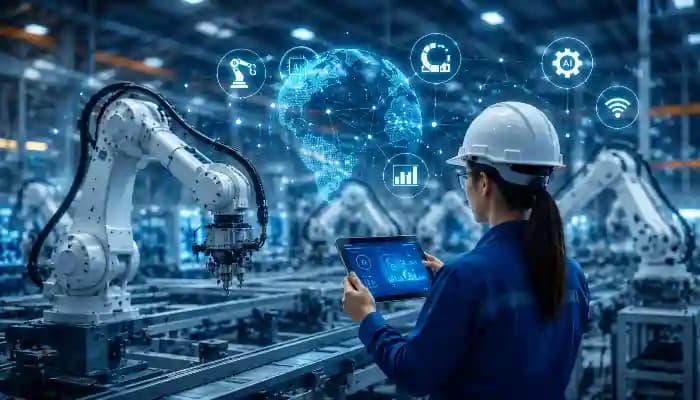

According to a TCS study, Physical AI is rapidly moving from experimental pilots to mainstream manufacturing, reshaping not only factory operations but also the future workforce.
Advertisement
In the latest Future-Ready Manufacturing: TCS Physical AI Readiness Report 2026, manufacturers are accelerating investments in AI-powered robotics and intelligent automation, creating new demand for digital skills while making workforce reskilling a strategic priority.
The study, based on responses from 300 senior manufacturing executives across North America and Europe, indicates that Physical AI is no longer viewed as a futuristic concept.
Instead, manufacturers are preparing to deploy AI-enabled robots, autonomous systems, machine vision, and intelligent sensors across production lines, warehouses, and logistics operations.
Advertisement
Physical AI Driving Workforce Transformation
The report reveals that;
- 77% expect Physical AI to transform warehouse operations.
- 75% believe it will reshape assembly and manufacturing processes.
- 26% plan to increase investments in Physical AI technologies.
- 68% of manufacturers are still in the pilot or experimental stage of Physical AI adoption.
- 91% believe AI-driven automation will be critical to improving operational efficiency and long-term competitiveness.
Organizations identified workforce readiness, legacy system integration, data quality, and governance as the biggest barriers to scaling Physical AI initiatives.
However, TCS emphasizes that the transition is not about replacing human workers but enabling Human + AI collaboration. Future factories are expected to rely on employees working alongside intelligent machines to improve productivity, operational efficiency, product quality, and workplace safety.
Advertisement
This shift is expected to redefine workforce planning as organizations redesign roles, invest in reskilling, and integrate AI into everyday manufacturing operations.
New Talent Demand and Emerging Skills
As Physical AI adoption gathers pace, manufacturers are expected to increase hiring for professionals with expertise in robotics, artificial intelligence, industrial automation, machine vision, edge computing, Industrial Internet of Things (IIoT), cybersecurity, and data engineering.
The report suggests that traditional manufacturing roles will increasingly evolve into technology-enabled positions, requiring employees to develop digital capabilities alongside domain expertise. HR leaders are therefore expected to play a critical role in preparing the workforce through continuous learning, reskilling, and upskilling initiatives.
For talent acquisition teams, the findings point to growing demand for AI engineers, robotics specialists, automation engineers, industrial data scientists, digital manufacturing experts, predictive maintenance specialists, and technicians capable of operating and maintaining AI-enabled production systems.
HR Must Lead the AI Transition
Despite growing investment, many organizations remain in the early stages of adoption, making workforce readiness a decisive factor in successful AI implementation.
For HR leaders, the challenge extends beyond recruiting specialised talent. Organizations will need structured reskilling programmes, AI literacy initiatives, change management strategies, and new approaches to workforce planning to ensure employees can successfully collaborate with intelligent machines.
As manufacturers continue their digital transformation journeys, Physical AI is expected to reshape job roles rather than eliminate them. Companies that invest in both technology and people will be better positioned to build resilient, future-ready manufacturing workforces.
About the Study
The Future-Ready Manufacturing: TCS Physical AI Readiness Report 2026 surveyed 300 manufacturing organizations across North America and Europe to assess enterprise readiness, investment priorities, adoption trends, and workforce implications of Physical AI technologies.
The report concludes that while Physical AI is becoming mainstream, its long-term success will depend as much on workforce capabilities as on technological innovation.
Note: We are also on WhatsApp, LinkedIn, and YouTube to get the latest news updates. Subscribe to our Channels. WhatsApp– Click Here, YouTube – Click Here, and LinkedIn– Click Here.
About the Author
Sheetal Singh
Sheetal Singh, Senior News Journalist, SightsIn Plus
View all articles by Sheetal Singh →